Spanish artists in the Fundación “la Caixa” Contemporary Art Collection (1940–1976)
Fragments, Quotes and Passages, curated by Oscar Pina, brings together twentieth-century Spanish art from the Fundación “la Caixa” collection. The exhibition grows out of a collaboration between the Foundation and the diplomatic corps to give value to Spanish art: the collection leaves the museum circuit and is shown in the embassies of Spain. Pina’s curatorship sets the selection and the reading of the collection; the scenography gives it form in the space of each city.
Each venue is a different challenge. Paris, Berlin, London, Dublin, Brussels or Rome offer very different conditions —some turned in on themselves, others open to the outside—, and the spatial staging resolves in each one the encounter between the collection, the building and the city.
Rome
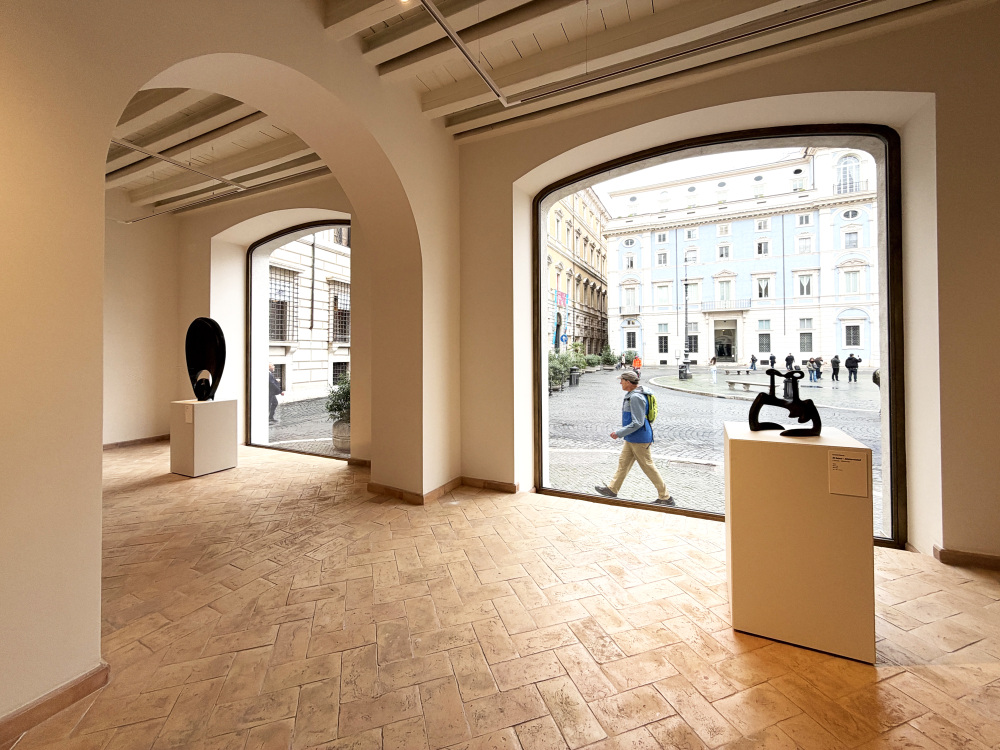
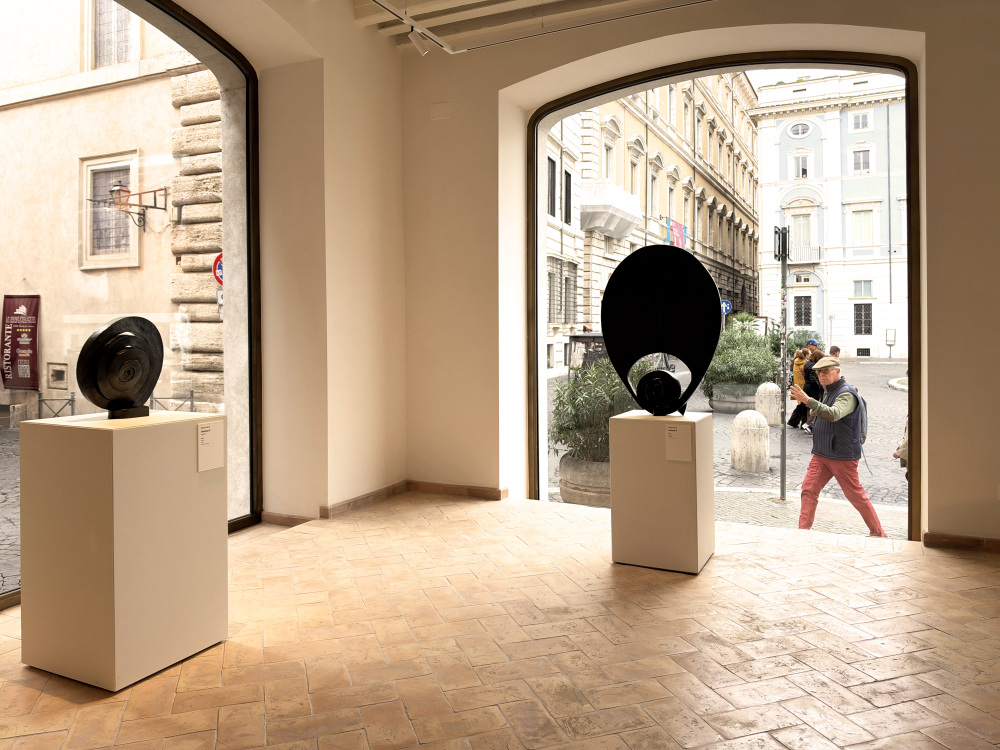
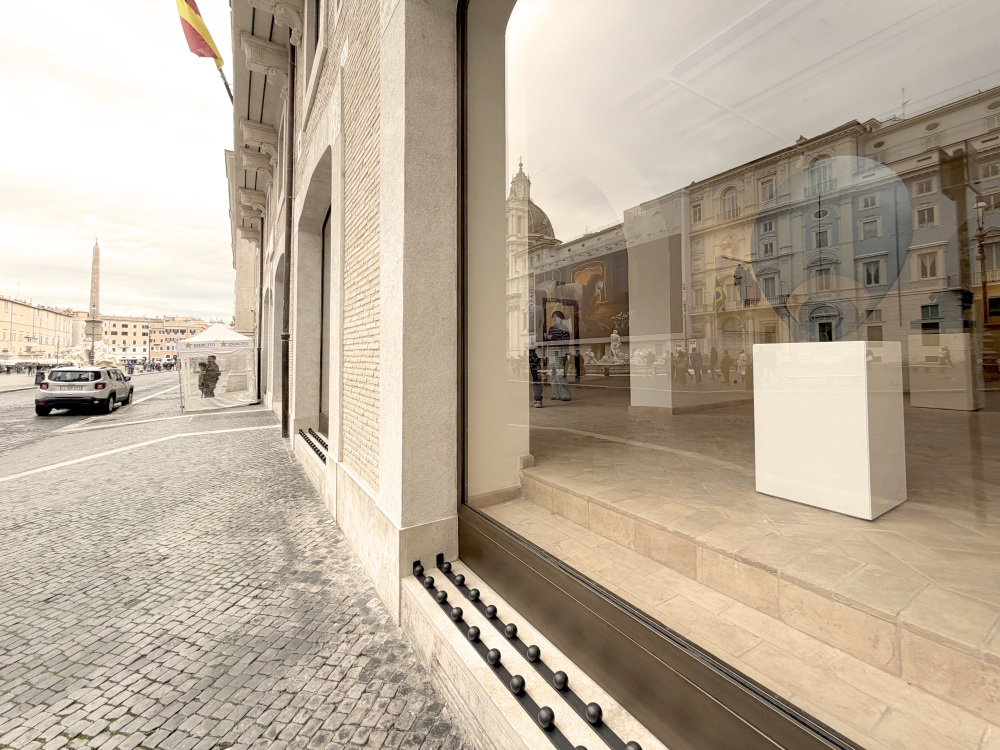
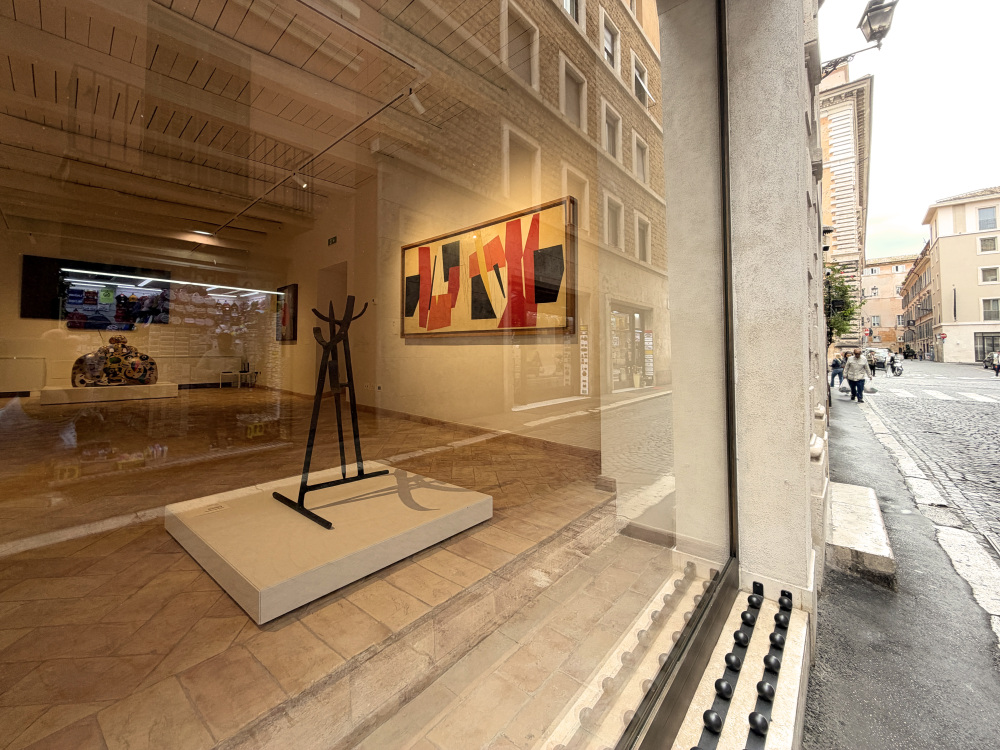
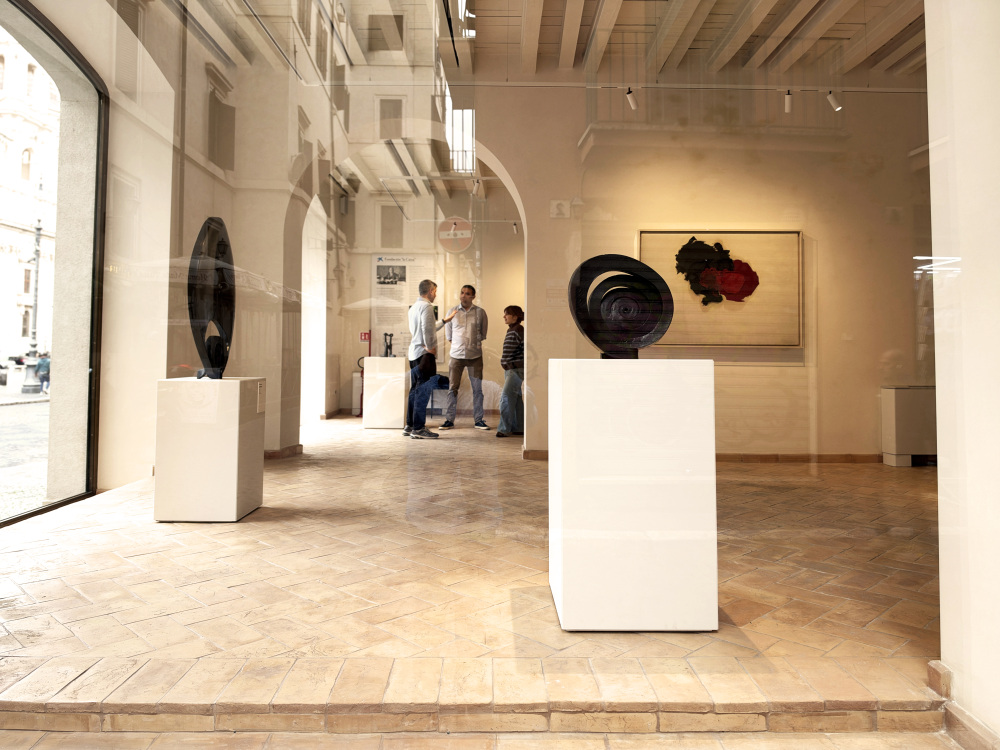
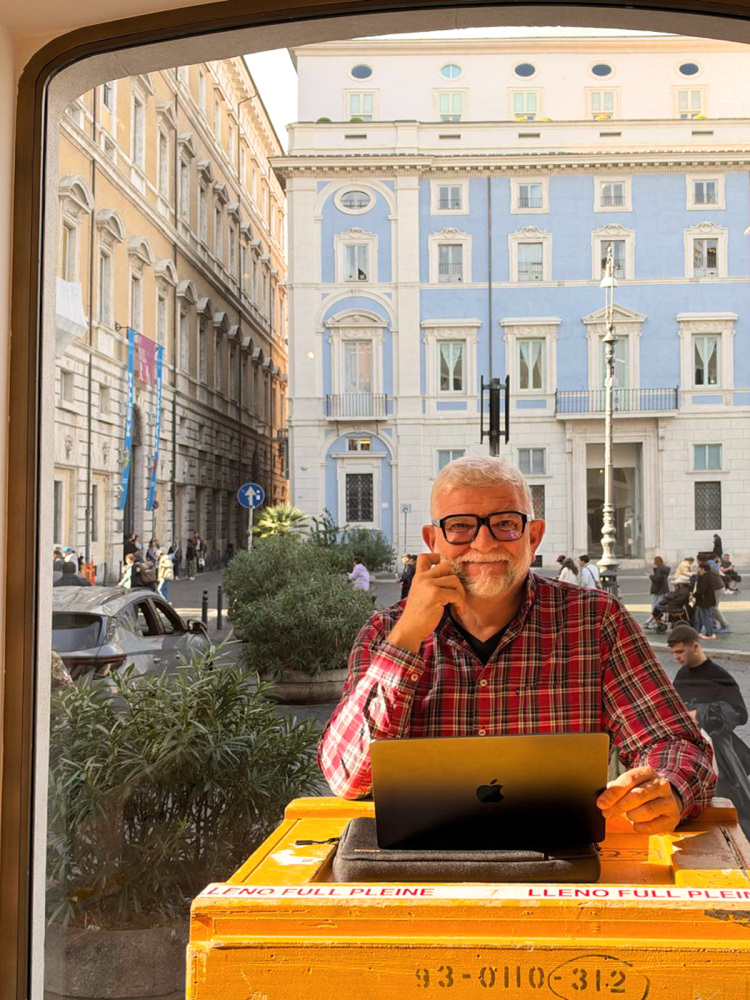
In Rome the exhibition occupies three small rooms at street level, with four windows opening like shop fronts onto the Piazza Navona and a narrow lane. Walking through the city —its churches, one after another, up to the climax of St Peter’s— reveals Rome as a dramatic sequence with its own action, and that reading helps to understand the installation. The Piazza Navona condenses that same Rome: opening the rooms towards it brings the square into the scene and puts the exhibition in direct relation with the experience of the city. The works are seen within that narrative, and the exhibition gains meaning.
Spanish artists have inhabited Rome in every era, and a collection of twentieth-century Spanish art, in its most essential expression, adds another layer to the experience of the city: one more window onto art within an immense imaginary.
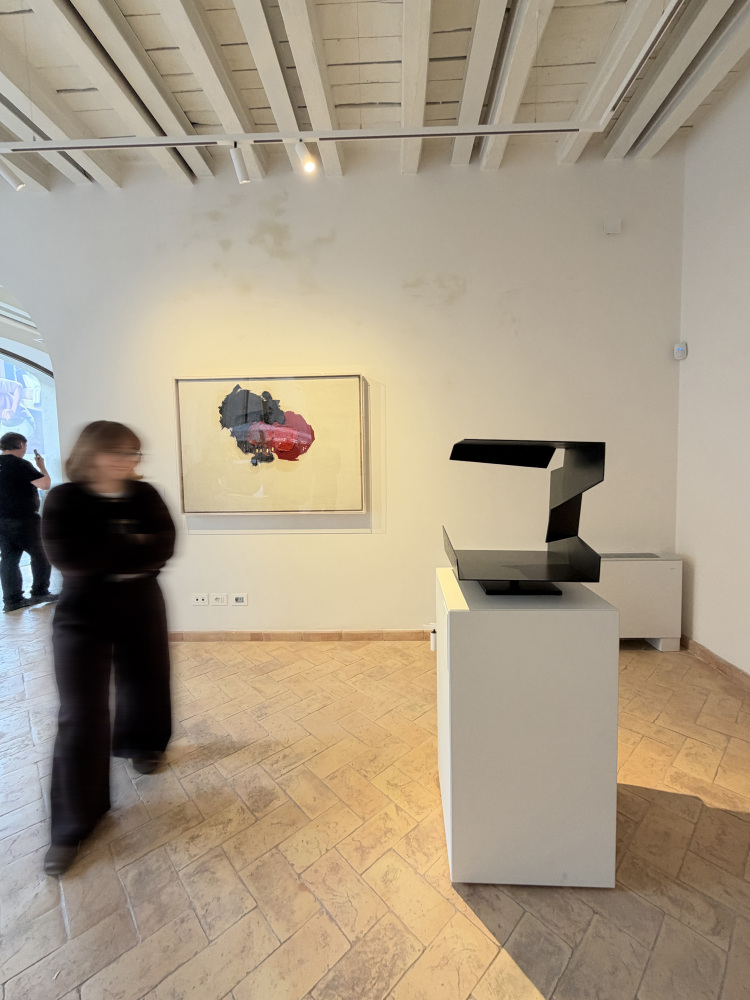
The placement of each piece is adjusted to the size and character of its room and to the dialogue with the exterior; the graphics follow the double front —in negative on dark grey towards the light-filled Piazza Navona, and in white towards the narrow street, to give it brightness—. Where other venues fold in on themselves, Rome builds the scene with the city and with the light.