05.01.2026 — In Primordial Light 26, each audiovisual tableau has been constructed as a digital altarpiece
In Llum primigènia 26, each audiovisual tableau has been constructed as a digital altarpiece.
The piece stems from a deeply rooted popular myth —Saint George, the Maiden and the Dragon— and revisits it by embracing its visual weight, its frontal quality and its symbolic force. The aesthetic deliberately approaches the altarpiece, the devotional image, the liturgical postcard, or even the kind of “holy card” that retains a direct connection with popular memory. This proximity seeks to bring that imagery into a contemporary, digital and scenic language.
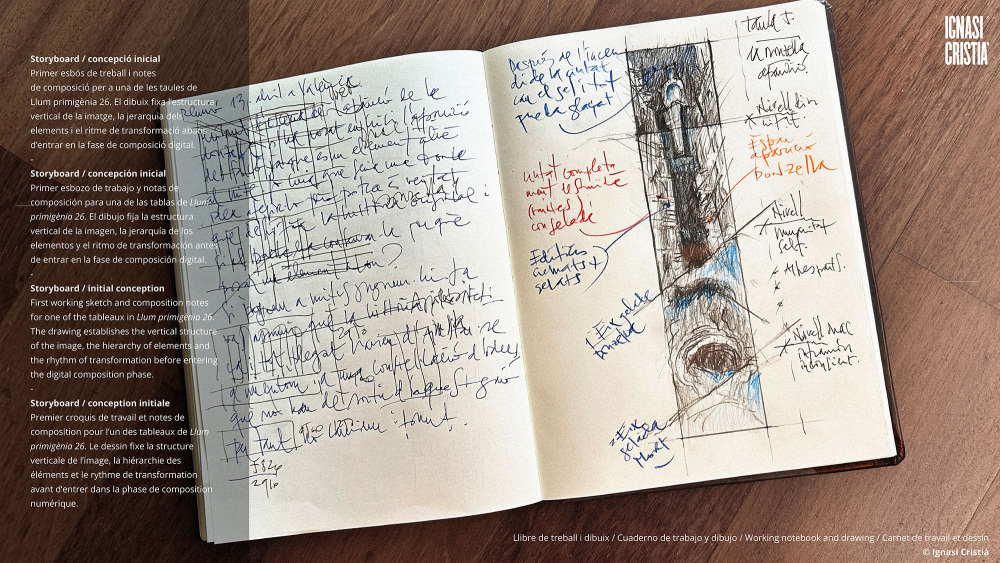
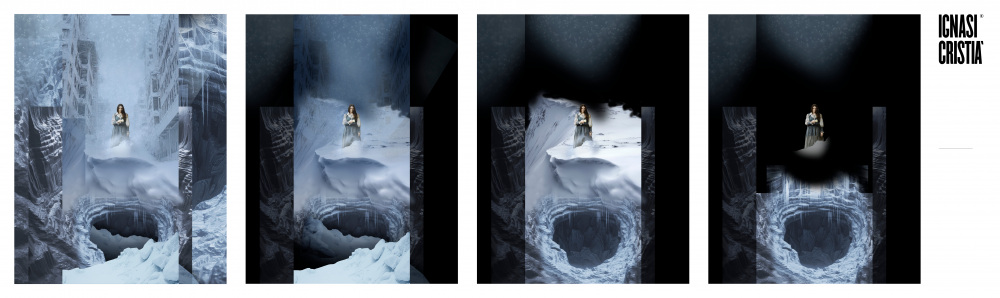
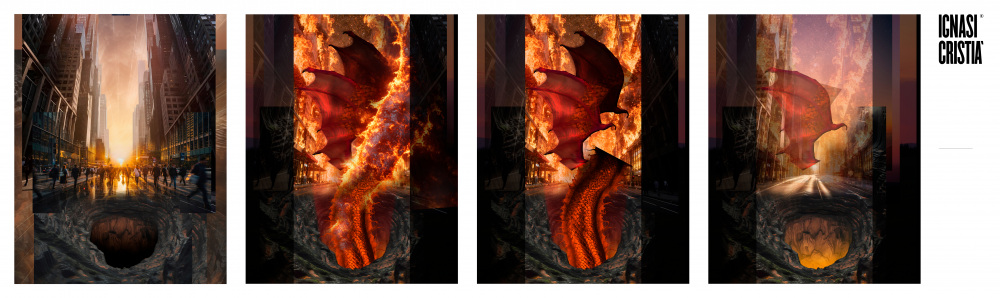
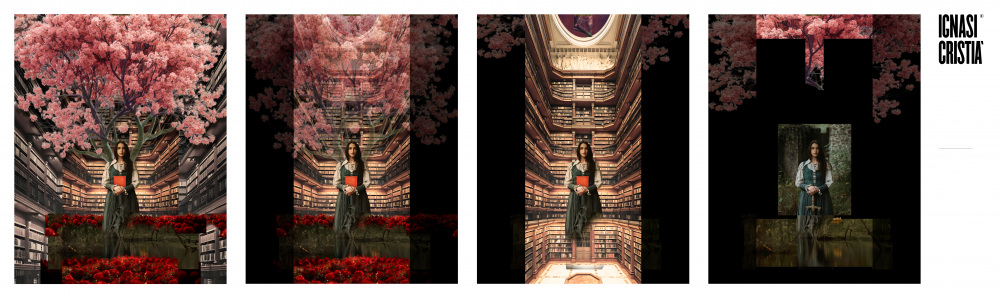
The process often begins with a note, a drawing or a storyboard structure. From that first gesture, each scene develops through a layered composition: architectures, figures, textures, landscape fragments, lights, smoke, roses, skies and veils are arranged in depth until a scenic space is built. In some cases, each tableau includes dozens of independent elements, worked one by one so that the final image has unity and internal breath.
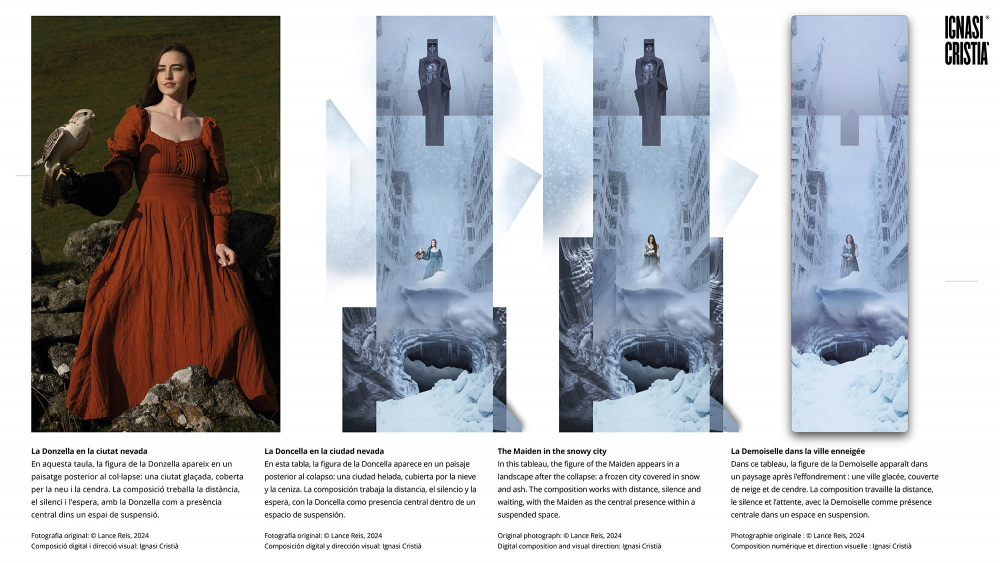
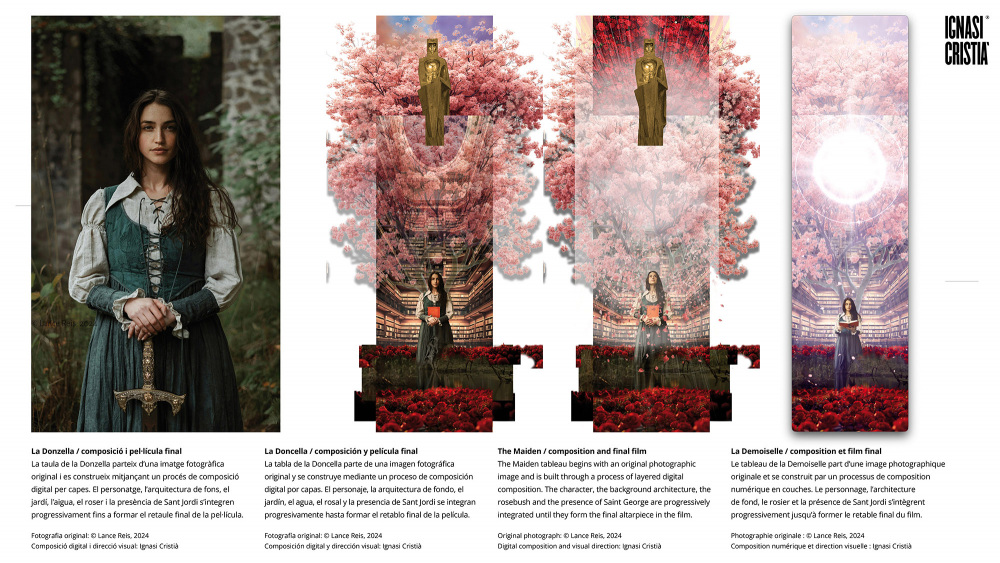
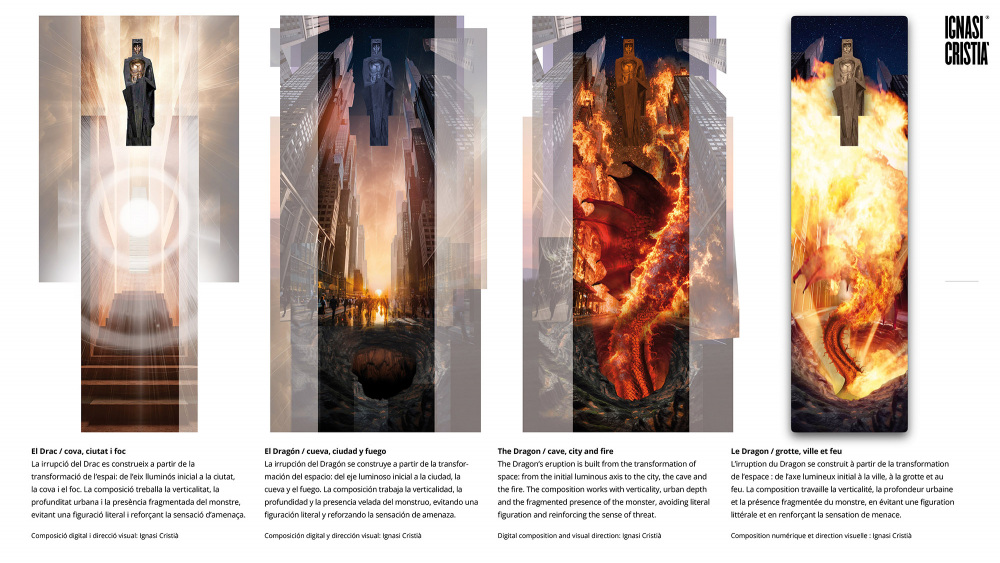
The following plates show this journey: the original image or first sketch, the intermediate stages of composition, and the final result within the film. What appears on screen is the result of a process of selection, cutting, editing, layering, correction, animation and adjustment, until each scene finds its own weight.
This process was especially important in an installation conceived for the central nave of the Sagrada Família. The vertical screen had to act as an ephemeral visual architecture integrated into the temple. For this reason, the background spaces, the scenographies and the relationship with the verticality of the basilica became essential parts of the composition.
Each tableau in Primordial Light 26 is a constructed scene. An image that slowly evolves. A digital altarpiece made of space, time and light.
This website uses cookies
We use cookies to personalise content and ads, to provide social media features and to analyse our traffic. We also share information about your use of our site with our social media, advertising and analytics partners who may combine it with other information that you’ve provided to them or that they’ve collected from your use of their services. For more information click here. You can consent to all cookies by clicking on “Accept” or modify or reject their use by clicking on “Settings”.
Cookies are small text files that can be used by websites to make a user's experience more efficient.
The law states that we can store cookies on your device if they are strictly necessary for the operation of this site. For all other types of cookies we need your permission.
This site uses different types of cookies. Some cookies are placed by third party services that appear on our pages.
You can at any time change or withdraw your consent from the Cookie Declaration on our website.
Learn more about who we are, how you can contact us and how we process personal data in our Privacy Policy.
Your consent applies to the following domains: ignasicristia.com
Cookie declaration
Necessary (4)
Necessary cookies help make a website usable by enabling basic functions like page navigation and access to secure areas of the website. The website cannot function properly without these cookies.
Name
Provider
Purpose
Expiry
cookies_accepted
ignasicristia.com
Remember which type of cookies the user has accepted.
1 year
ignasicristia_session
ignasicristia.com
Remember the language chosen by the user or inferred from browser's preferences.
2 hours
projects_order
ignasicristia.com
Remember order in projects list.
End of sessión
XSFR-TOKEN
ignasicristia.com
Prevent CSRF attacks.
2 hours
Statistics (2)
Statistic cookies help website owners to understand how visitors interact with websites by collecting and reporting information anonymously.
Name
Provider
Purpose
Expiry
_ga
ignasicristia
Used to distinguish users.
13 months
_ga_3C6MXYBM93
ignasicristia
Saves the Google Analytics property used on the website.