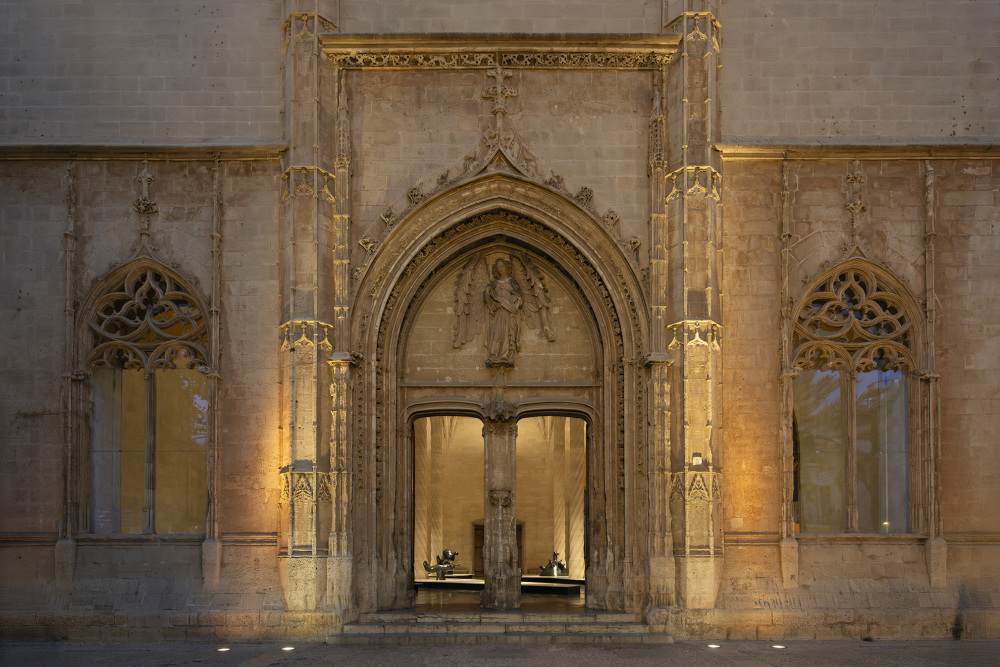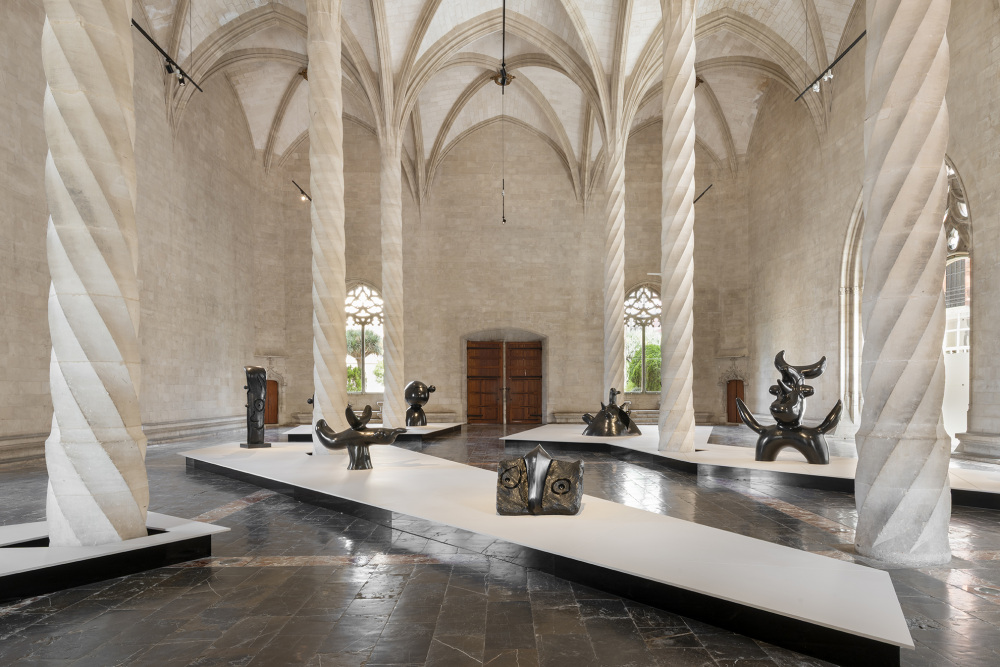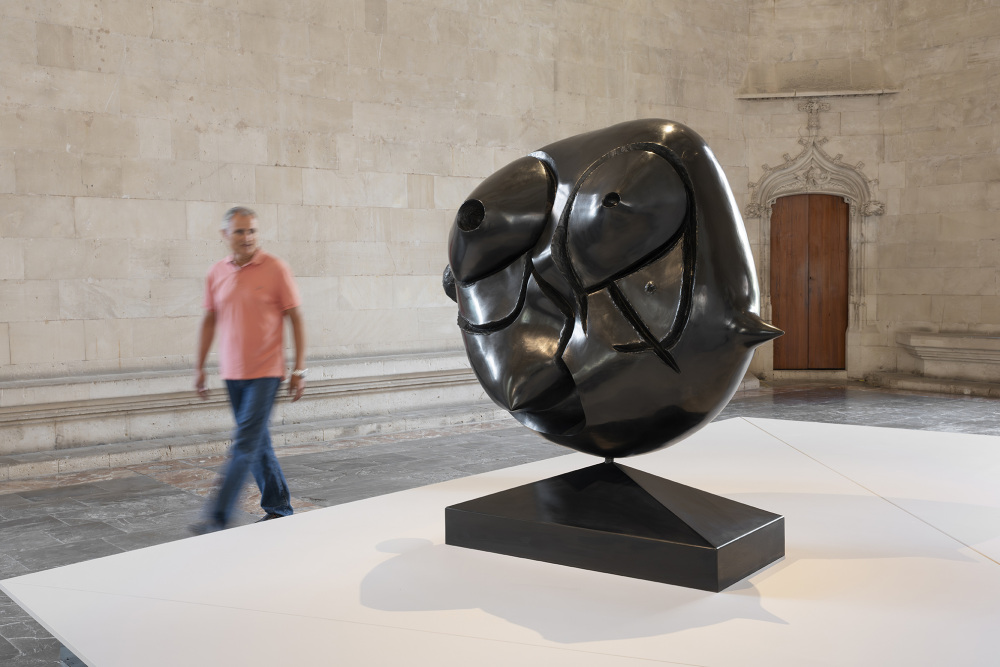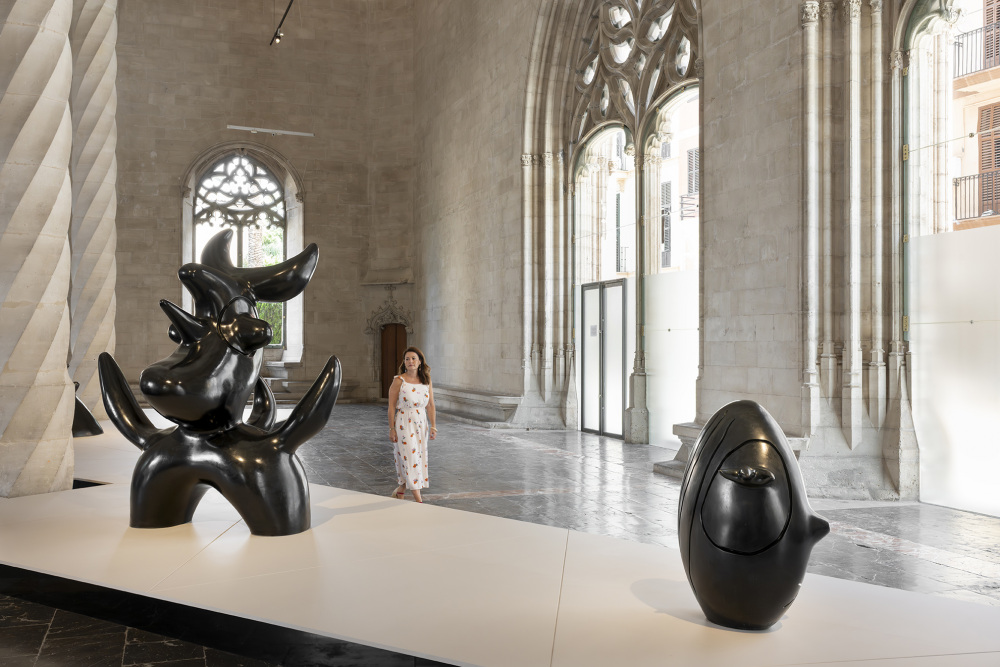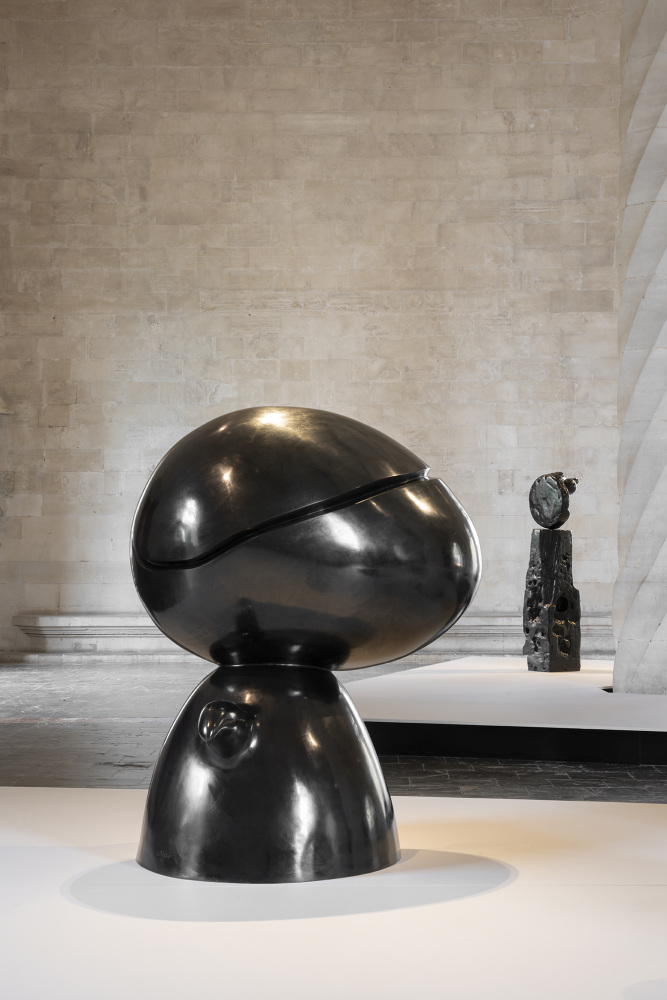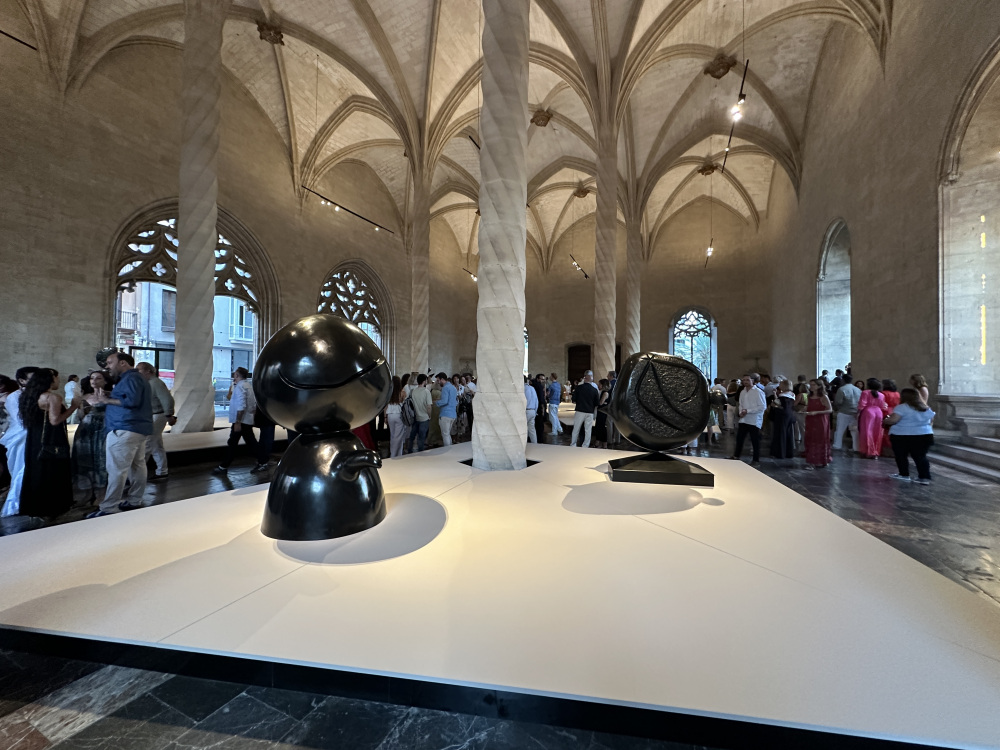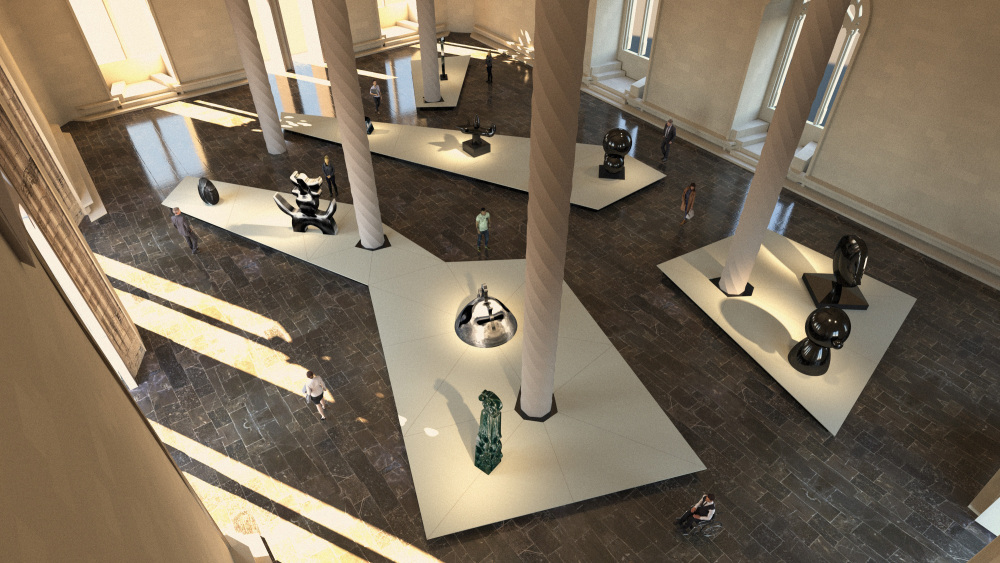

The exhibition of sculptures by Joan Miró at the Llotja de Palma presents ten pieces —some large-format, others more contained in scale— in direct confrontation with the monumentality of the Gothic building. More than a simple contrast, a genuine conflict of forces emerges: the architectural mass threatens to overpower the sculptural gesture, while Miró’s works assert their presence from a place of formal freedom. This tension becomes the driving force of the museographic proposal, which does not begin from harmony, but from a fundamental friction between two languages —material and symbolic.
Everything began in February, during a first visit to the site. I didn’t know the Llotja. Upon entering, I immediately understood that such a powerful space would not allow for neutrality. The proposal was to install ten black bronze sculptures by Joan Miró. The challenge was clear: the dark floor would absorb the pieces. If placed directly on the ground, they would vanish. My response was to offer them a structure —a surface capable of containing them, of giving them presence and strength.
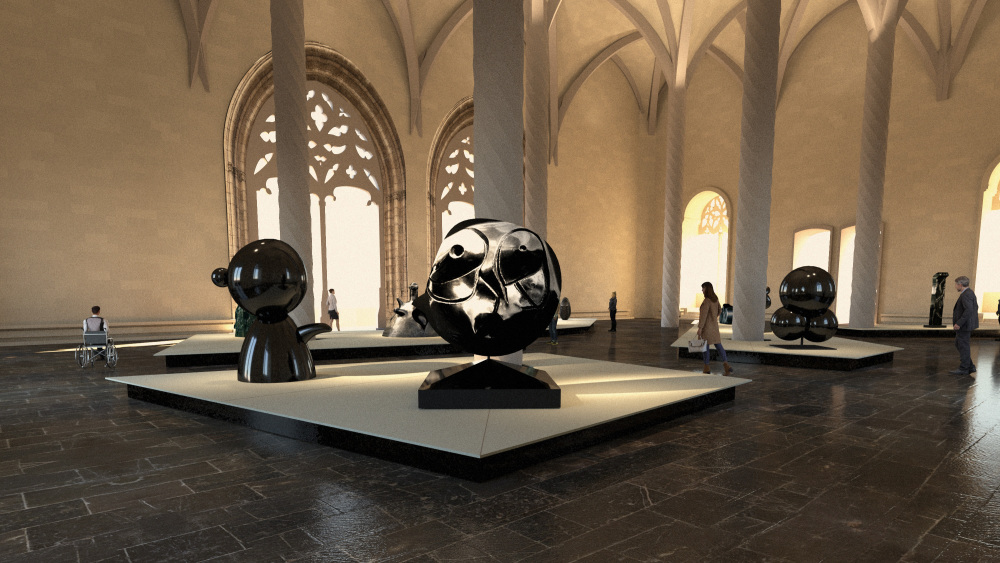
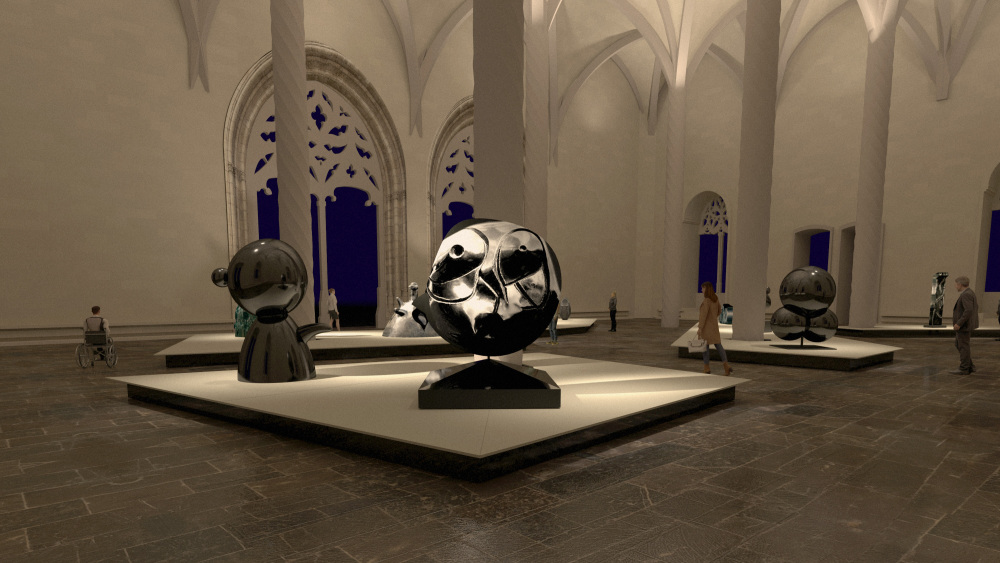
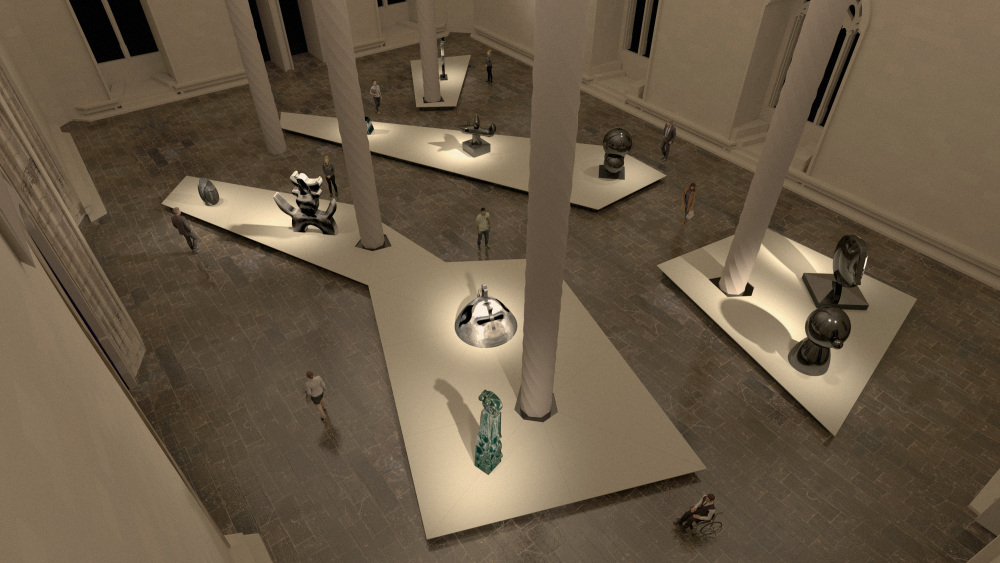
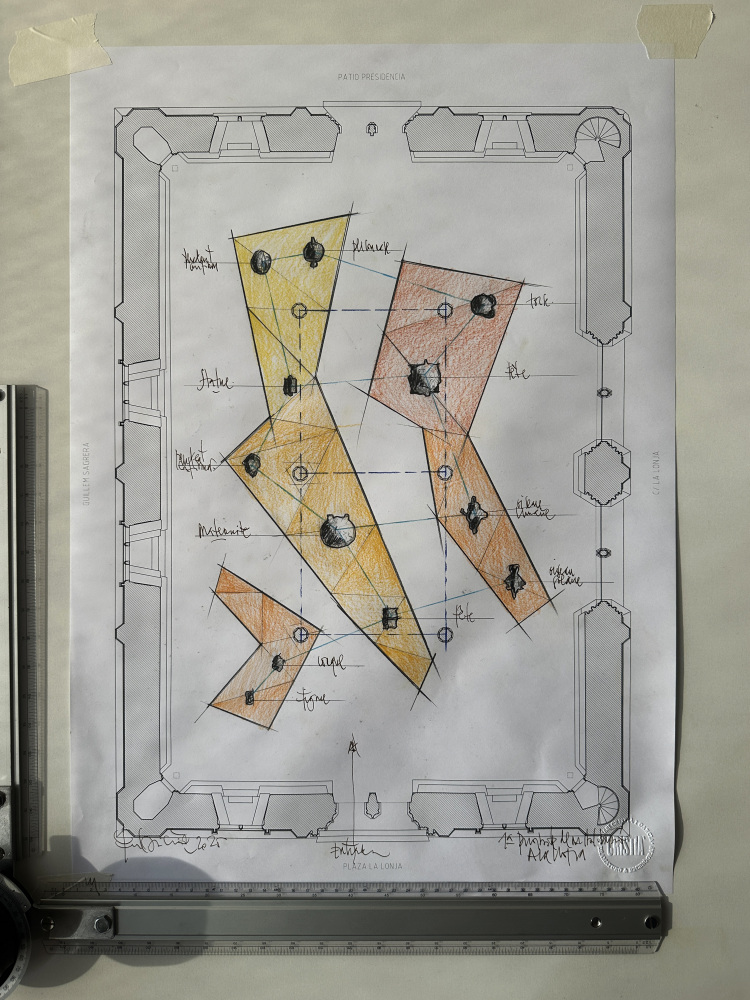
Inspired by Miró’s notion of constellations, this platform was conceived as an autonomous visual field, allowing the sculptures to emerge and establish new relationships —between each other and with the space. It was also designed to receive natural light during the day and artificial lighting by night, generating a subtle transition between sculptures and constellation. This amalgam —of form, place, and light— became the key to giving the works the strength they needed to engage in a true dialogue with the architecture.
The creative force of the sculptures, held within the Llotja, calls for its own universe —a universe where each piece can interact both with the others and with the space that surrounds them. This universe does not seek to resolve the conflict, but to embrace it as a condition of possibility. There is no hierarchy, only a desire for relation. In this autonomous space, where everything connects through inner tensions and sensitive correspondences, the sculptures gain a presence capable of standing their ground against the architecture.
Museography, in this context, becomes a tool of active mediation: it neither imposes nor disappears, but accompanies the reading of the whole as if it were a constellation in motion. Each piece occupies a precise place within this imagined map, establishing relationships of proximity, alignment, or contrast —in a balance that is always delicate and alive. In this way, the exhibition creates a space for dialogue, where the force of the Llotja and Miró’s symbolic freedom can coexist on the same plane of energy and meaning.
Light accompanies the exhibition as a living element. By day, natural clarity enters the Llotja and defines a shifting, subtle atmosphere —marking the passage of time and activating new relationships between sculpture and architecture. When night falls, theatrical light takes over, drawing a landscape of contrasts. Illumination becomes yet another narrative layer, intensifying the dialogue between Miró’s world and the architectural presence of the Llotja.
A constellation inhabiting the universe of the Llotja.
-
Promoting institution: Government of the Balearic Islands
Location: La Llotja, Palma
Photographs: © Roberto Ruiz
Renderings and sketch: © Ignasi Cristià, S.L.