
The museum occupies a rehabilitated building in which two brick barrel vaults were recovered in the lower ground floor. They are narrow, low, curving spaces: hostile to frontal projection, short on both throw distance and height, with the vault swallowing any conventional screen. Rather than fight the vault, the scenography generates the depth the architecture denies.
In the first room of the route, "La primera impresión", visitors could follow the process of printing a book: a reconstruction, based on the engravings of the French Encyclopédie, of the tools needed to produce one, from the cases of type to the press, by way of the bindery.
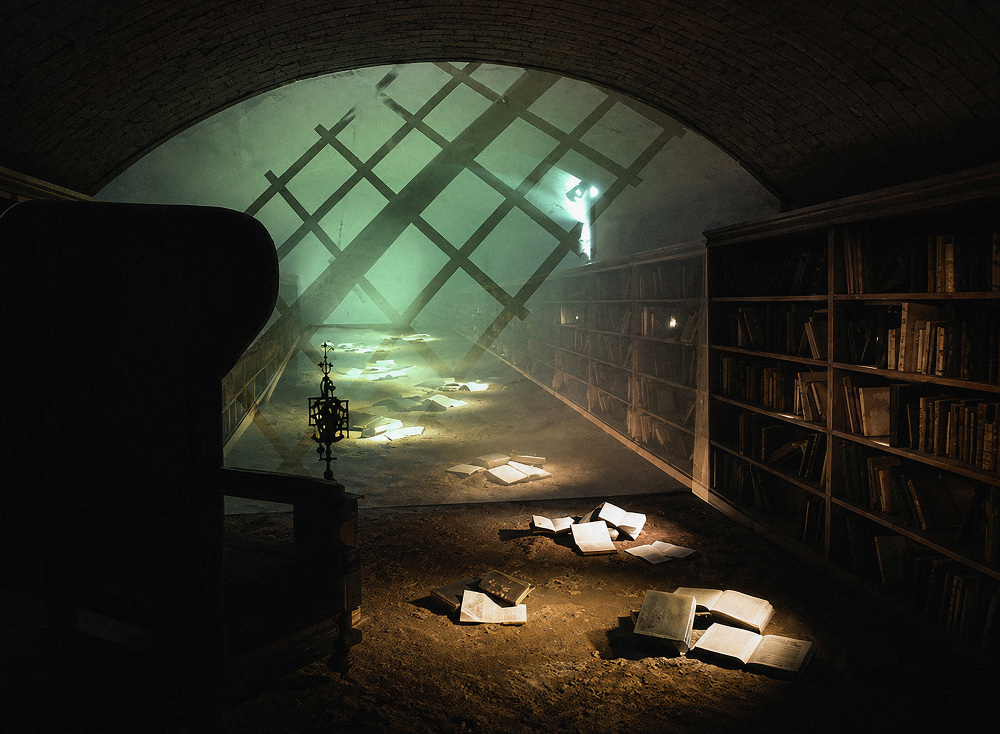
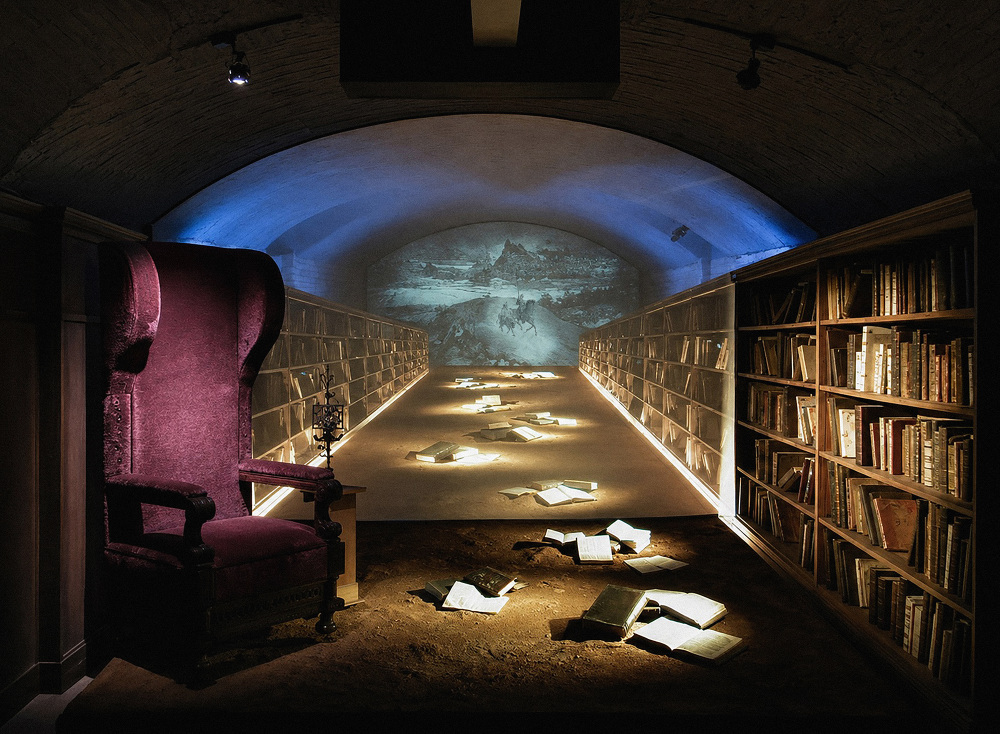
In the second space they came upon the iconic armchair of Don Quixote, reproduced from an engraving by Doré; to the right, a bookcase, and on the floor a volume or two flung down in a fit of madness. The first image projected onto a gauze was the same one that had appeared on the freshly printed book in the previous room. As the narration turned to the knight errant losing his reason, the wall closing off the space became a screen and, through a play of projections at the far end, revealed the road bursting open towards utopia; two bookcases built in forced perspective drew the eye to the back, where the images accompanying the story were also projected. In this way the morphology of so measured a space made it possible to draw a vanishing line towards the open country of the adventures of Don Quixote and Sancho Panza. The books strewn across the floor evoked the knight errant's flight into his own world.
The museum opened in April 2001 and both rooms remain in operation.
Concept and design: Ignasi Cristià. Production: Konic Audiovisuals. Photographs: Ignasi Cristià.