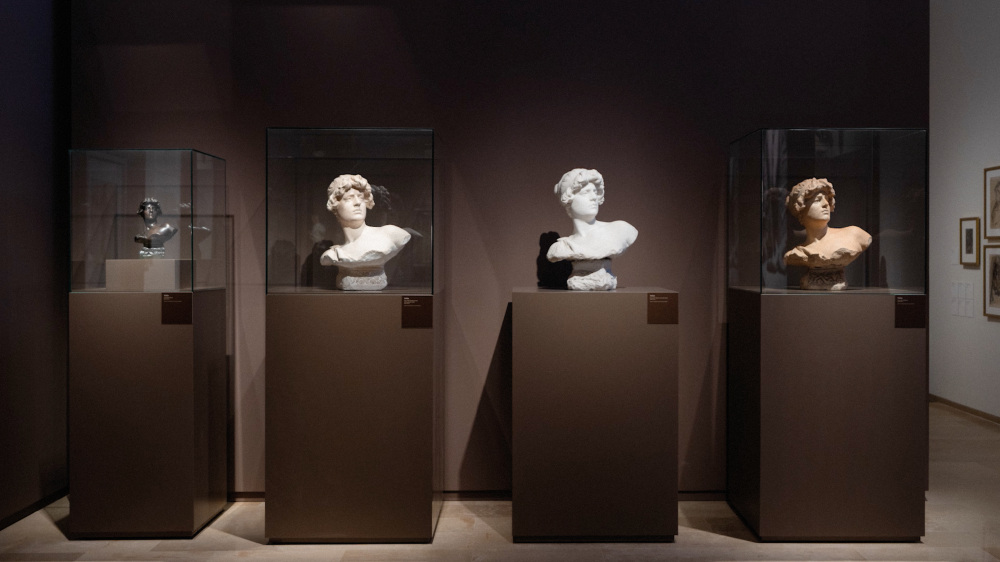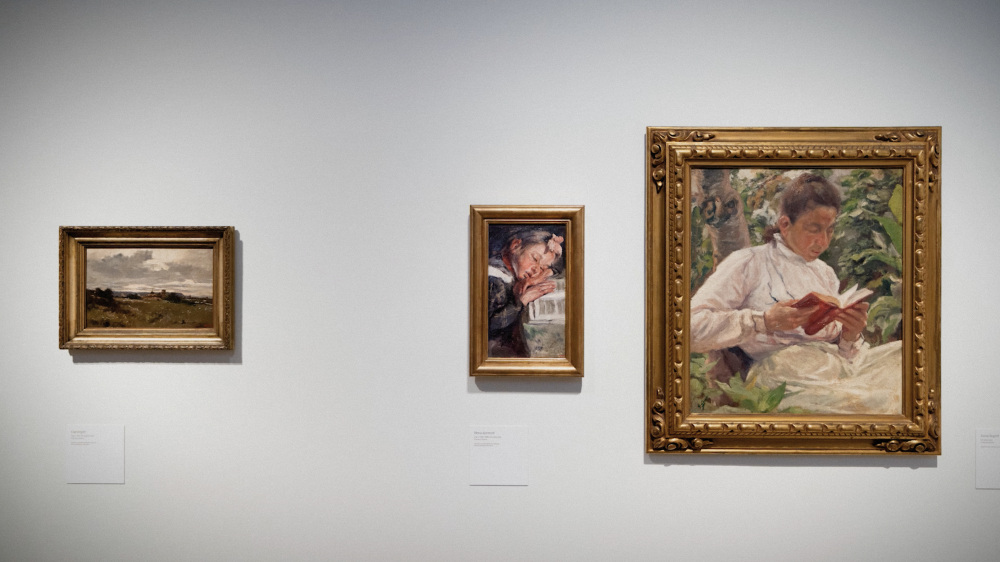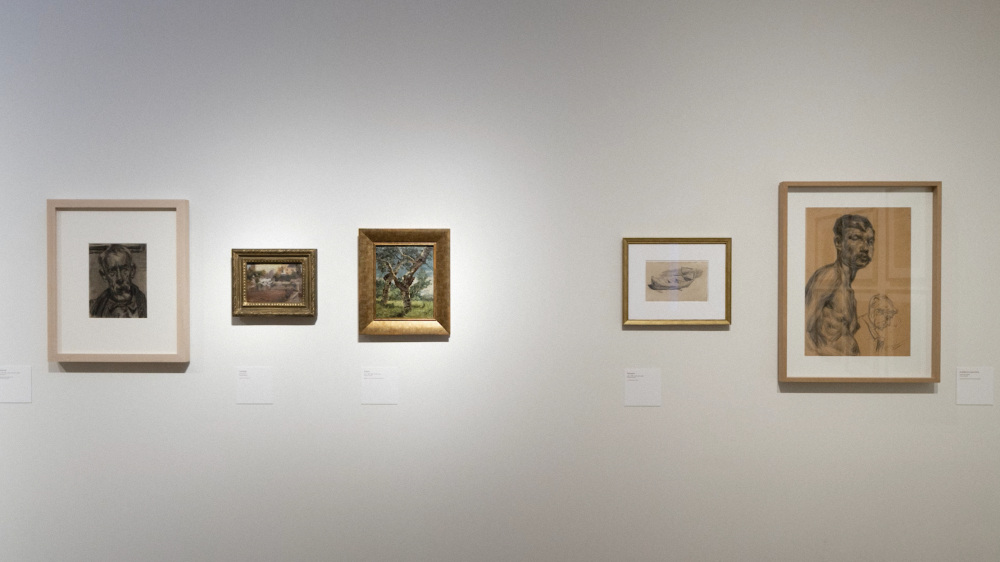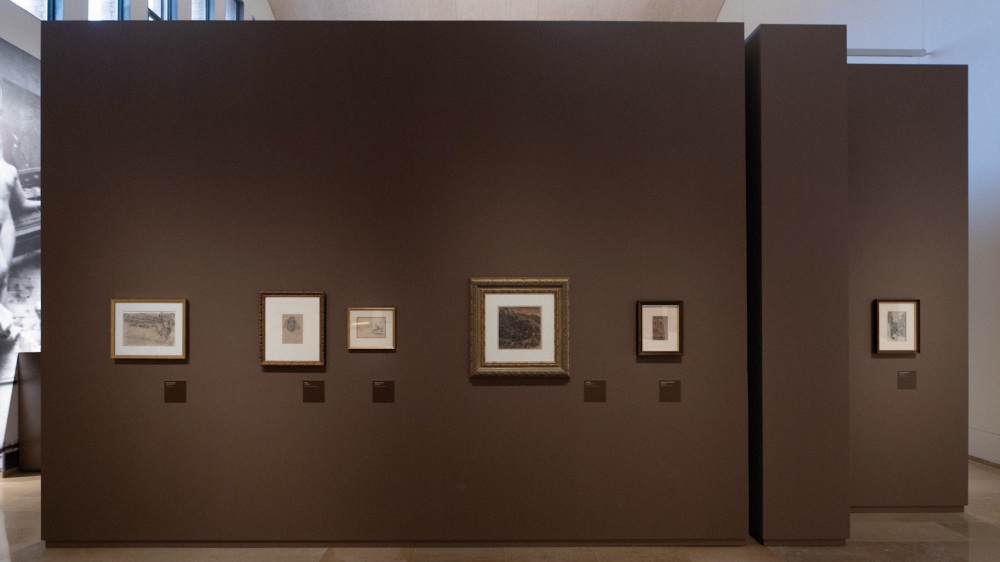


This project began to take shape during the pandemic, a challenge that led us to bring together, in a single space, three great artists from Tortosa who lived between the 19th and 20th centuries.
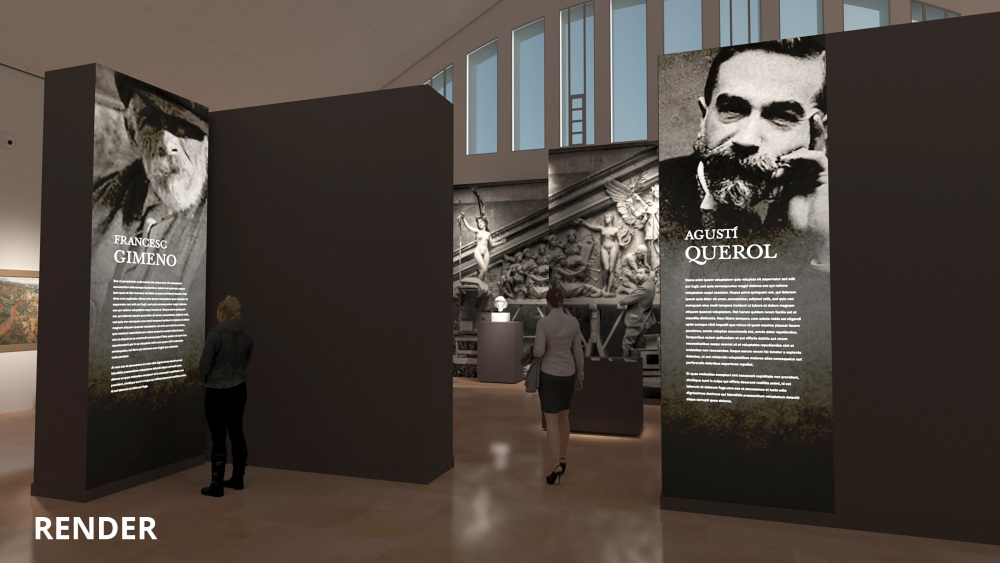
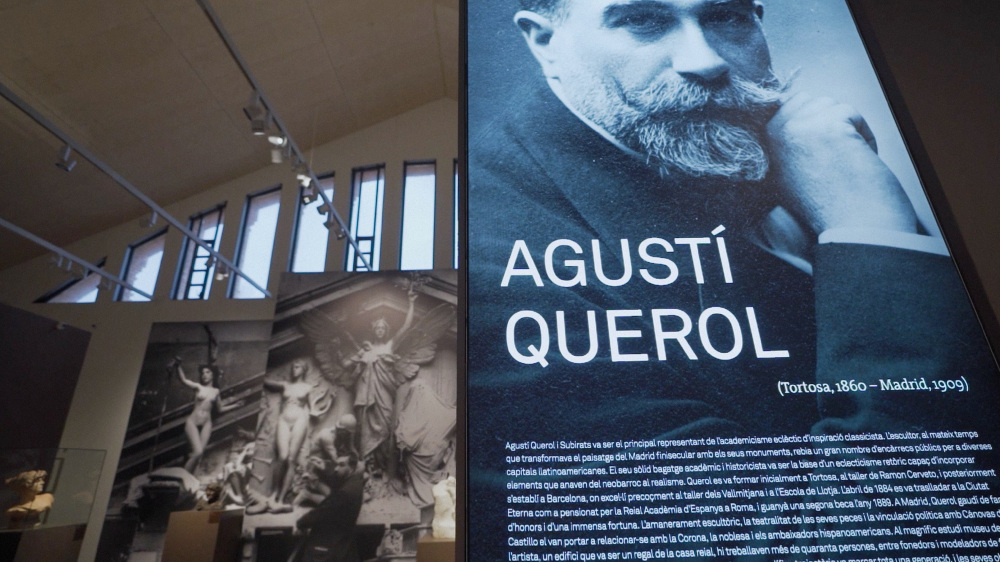
The resulting scenography highlights the uniqueness of each of them, giving them prominence from the very first moment. In the welcome area, three imposing images invite us to immerse ourselves in their universe: the gazes of Antoni Casanova, Francesc Gimeno, and Agustí Querol welcome us and introduce us to the enjoyment of the visit.
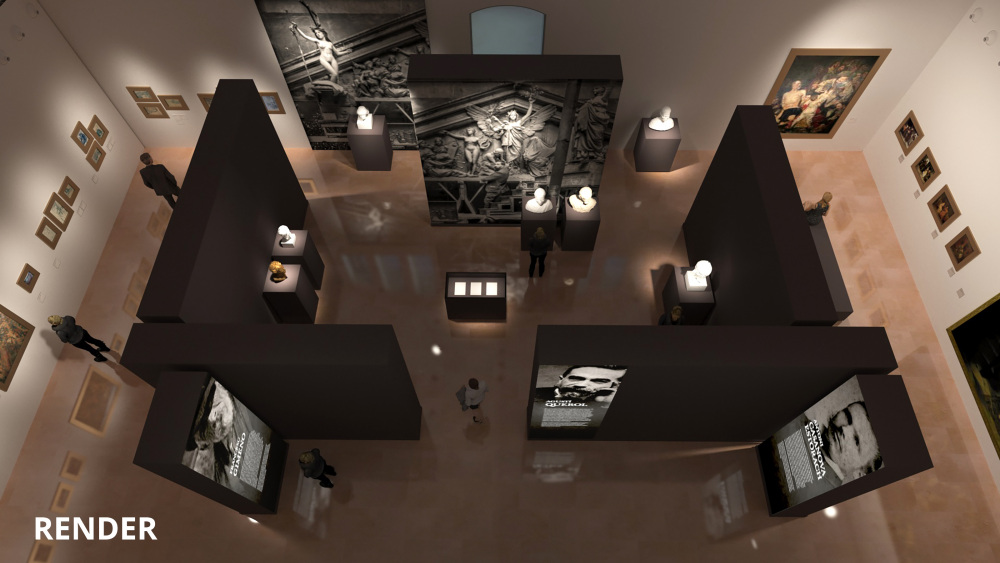
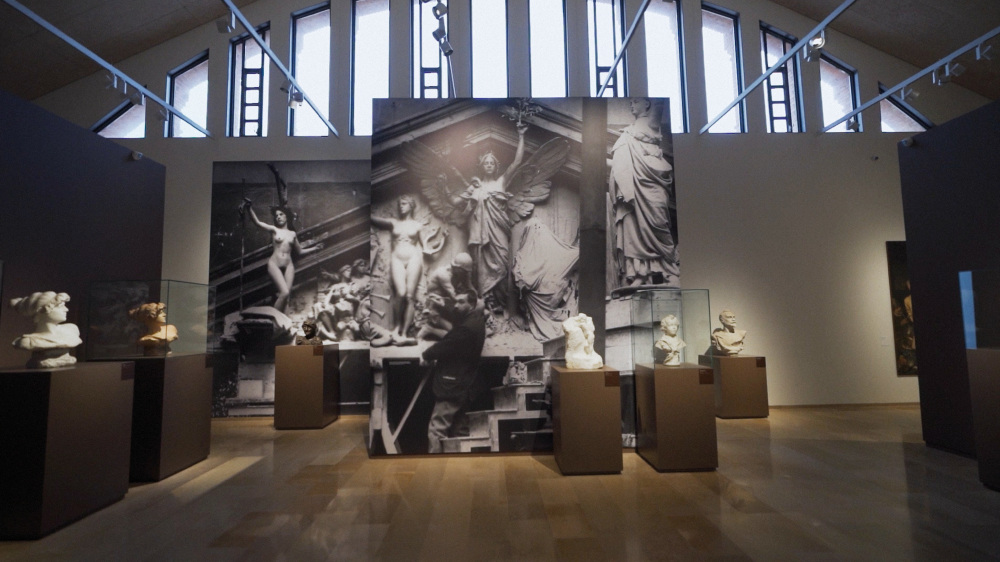
At the back of the room, a large image of Agustí Querol’s workshop, where he projected the frieze for the National Library of Madrid, serves to contextualize his work, recreating the artist’s creative space and adding depth to the exhibition.
This project, developed in a context where we all had to learn to work remotely, was made possible thanks to the excellent collaboration with the three curators — Núria Gil, Jordi Carbonell, and Àlex Roig — specialists in each of the artists, and to the professionalism of the team at the Museum of Tortosa, led by Eva Castellanos.
The central thesis of this new gallery at the Museum of Art of Tortosa explores how the economic and social circumstances of the time transformed the perception of the art world and the role of artists, giving rise to the modern artist.
This movement, originating in major cities, extended its influence widely and took root in the works of some creators from the Ebro region. The protagonists of this story—Antoni Casanova, Francesc Gimeno, and Agustí Querol—are Tortosa artists who, beyond their common origin, share the distinction of having transcended the local sphere to achieve national and international recognition. Each of them, however, followed a different path, with unique artistic approaches and relationships with the powers of their time. Their artistic development, initially far from the main production centers, led them to leave their hometown in search of artistic training and, later, a market for their work.
Despite their differences in trajectories and artistic production, their juxtaposition offers a panoramic view of a period that ultimately becomes universal. The Ebro region thus serves as a paradigm of peripheral territories where the need to create and offer a unique vision of the world asserts itself forcefully.
The introductory space includes, in addition to the thesis text, a presentation of each artist and some representative pieces of their work, immediately highlighting both their similarities and differences. A three-level timeline—covering the artists' lives, the local context, and global evolution—is displayed on one of the walls.
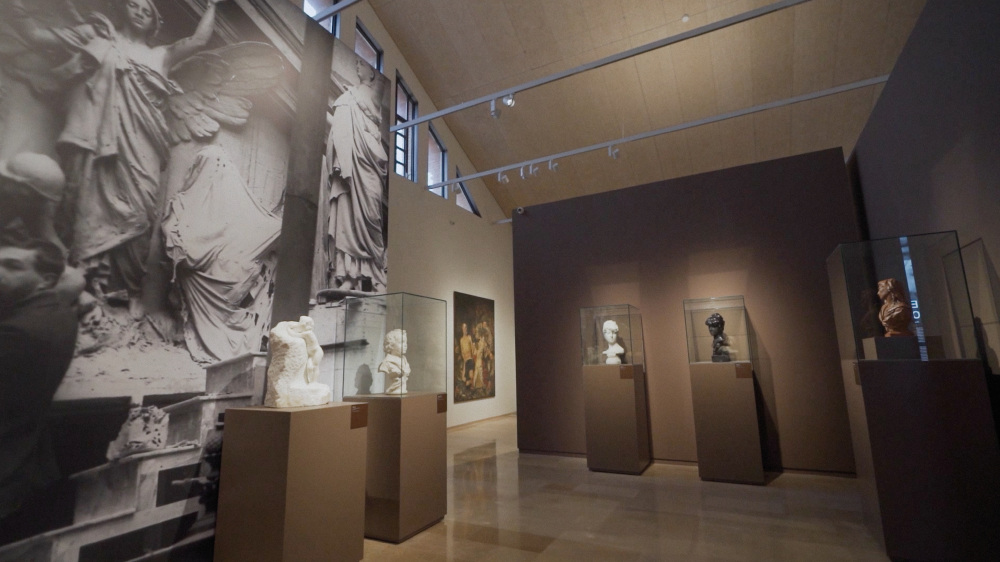
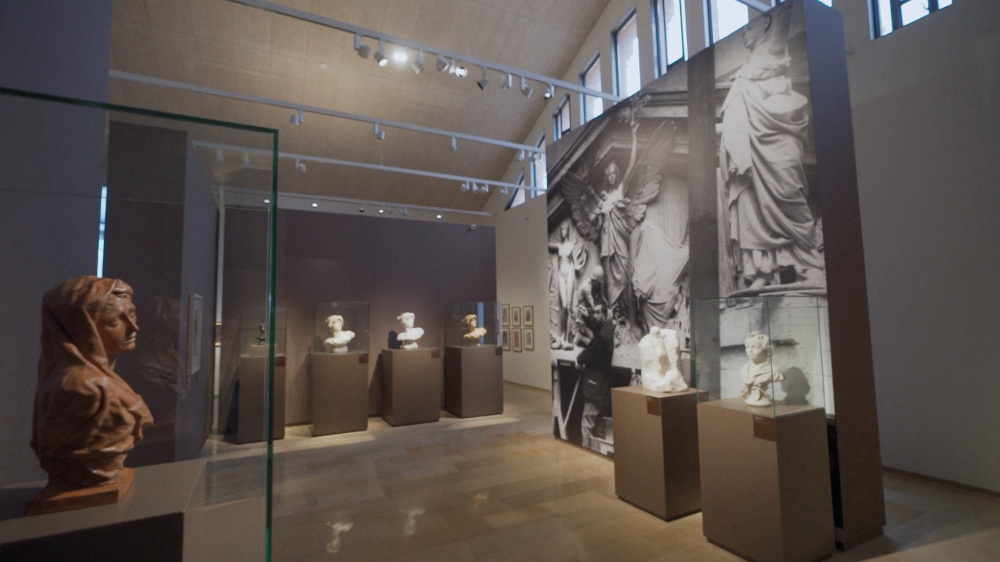
At the back of the space, a large-format reproduction of Querol's workshop, showing him working on the sculptures for the pediment of the National Library of Madrid, serves as a visual focal point from outside the hall.
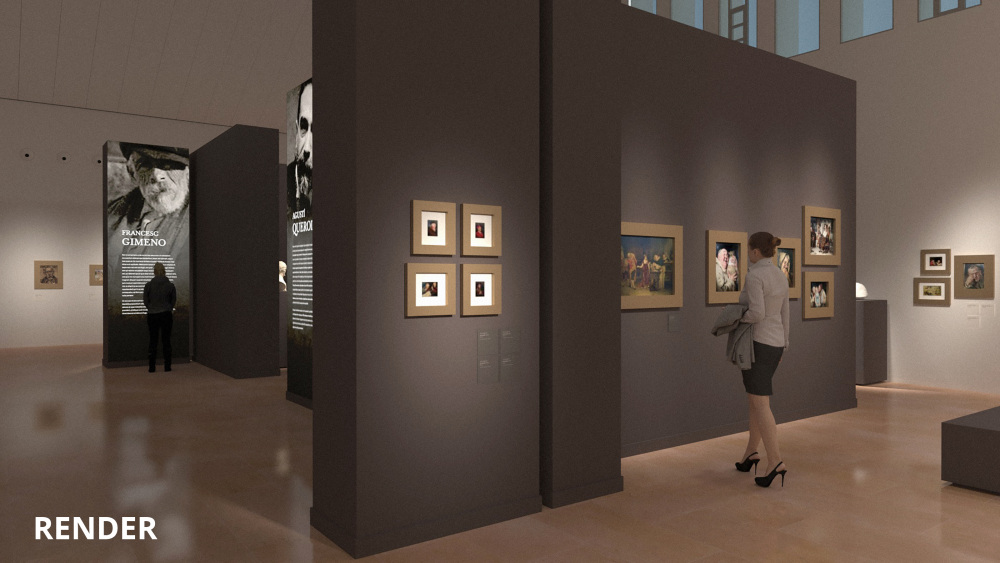
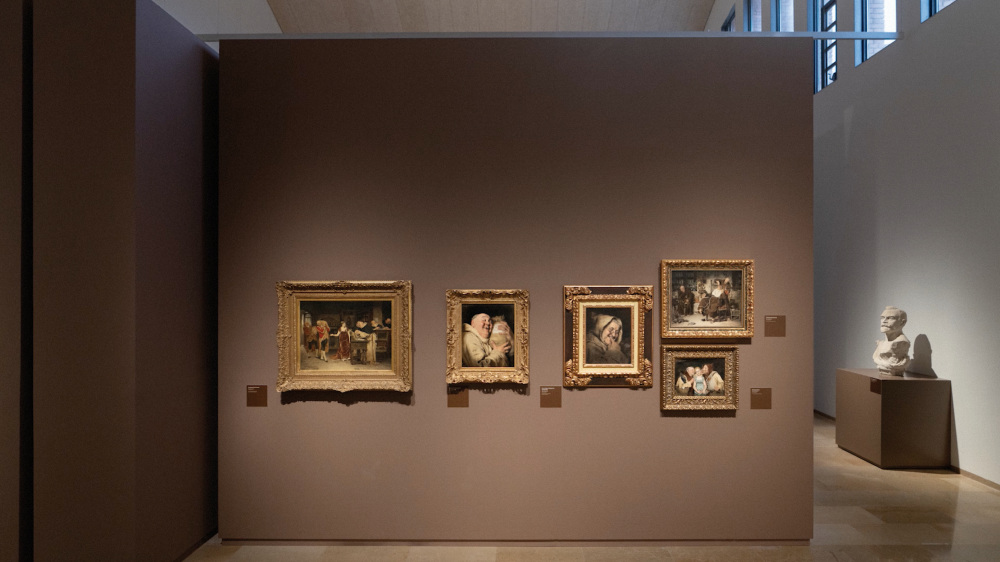
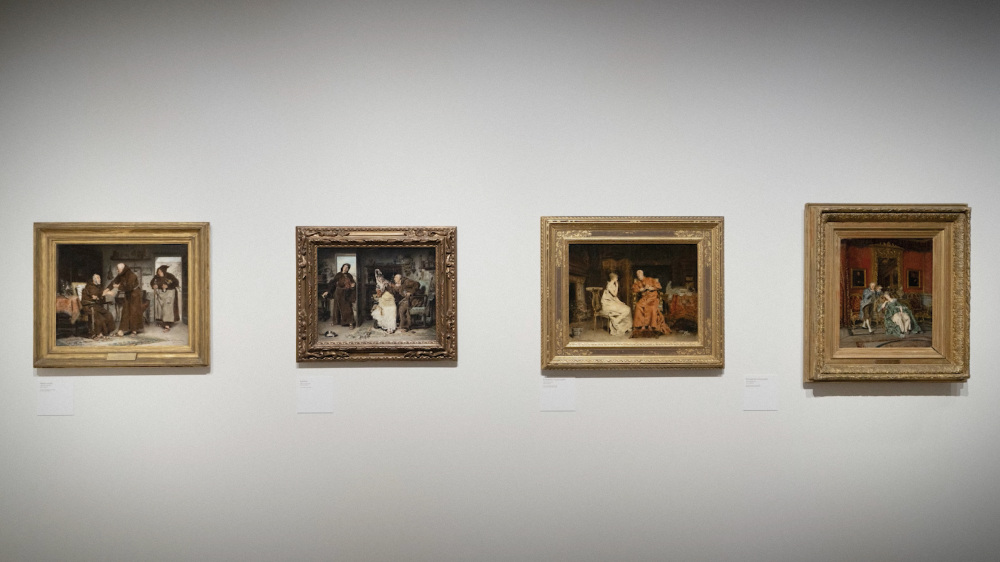
The exhibition journey begins on the left with Francesc Gimeno's intimate works, continues with Agustí Querol's expressive and grandiose sculptures, and concludes with Antoni Casanova's anecdotal-themed works. Although this arrangement does not follow chronological order, it enriches the narrative by interweaving sculpture with painting.
The areas are defined by movable walls, while the perimeter of the room changes color, alternating between light and dark tones in harmony with the transition between sections.
-
© Images and video: Àlex Panisello, © Renders: Ignasi Cristià, S.L.