

A society cannot be considered mature until it confronts and learns from its past, as memory is the key to building a fairer and more conscious future.
Throughout my professional career, I have worked on various projects with the aim of restoring and bringing to light traumatic events that have shaped a community and, consequently, society as a whole. This project brings to the forefront a past that is not so distant.
The slave trade, a highly profitable business in 19th-century Catalonia and Spain, was a human tragedy that endured until its abolition. This commerce enriched an elite of the time and had a direct impact on the local economy: theaters, buildings, and public infrastructure benefited from the trade of raw materials from Cuba and other American countries.
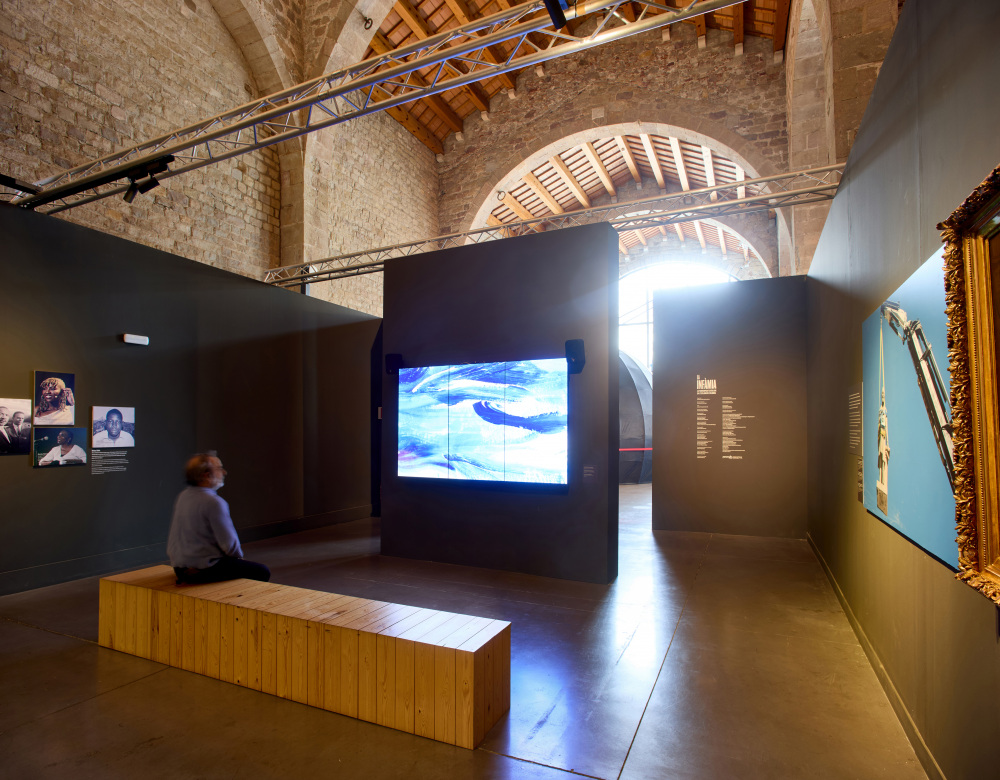
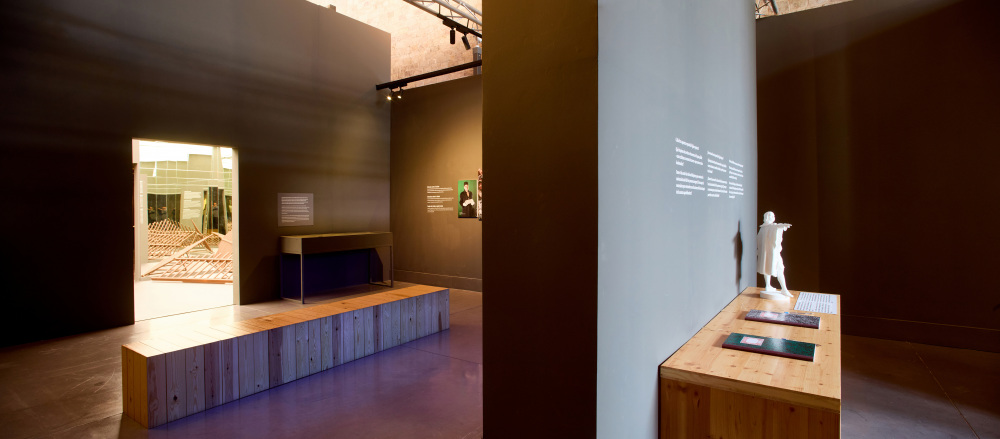
The staging of this exhibition is an invitation to travel through history and rediscover the journey of enslaved people. To enhance the impact of the narrative through a dramatic structure, I have designed the spaces as a metaphor that helps us understand how society functioned at that time.
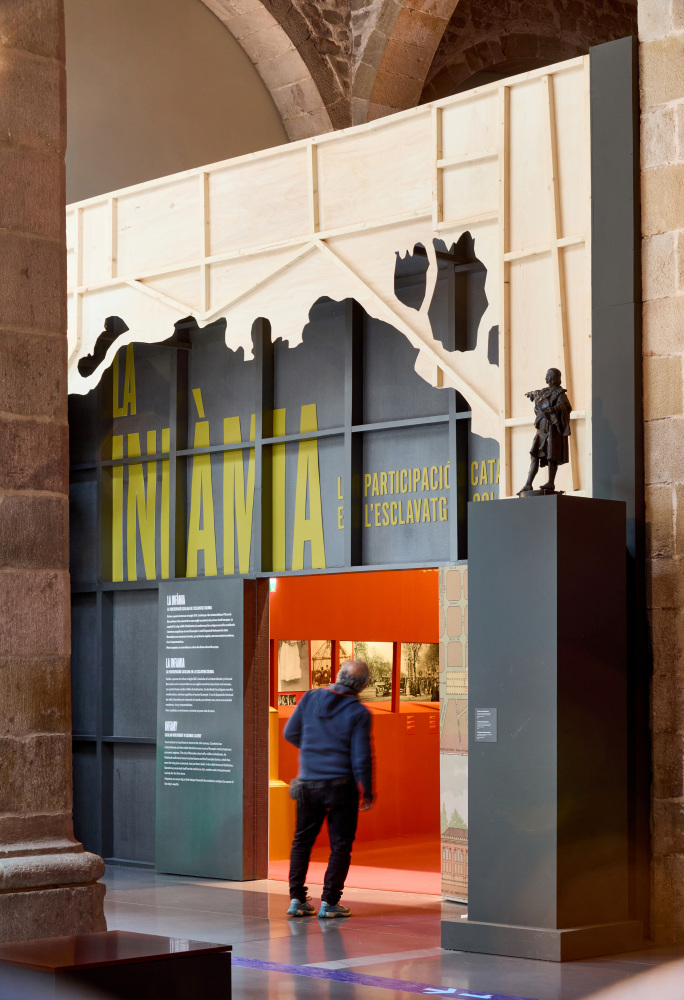
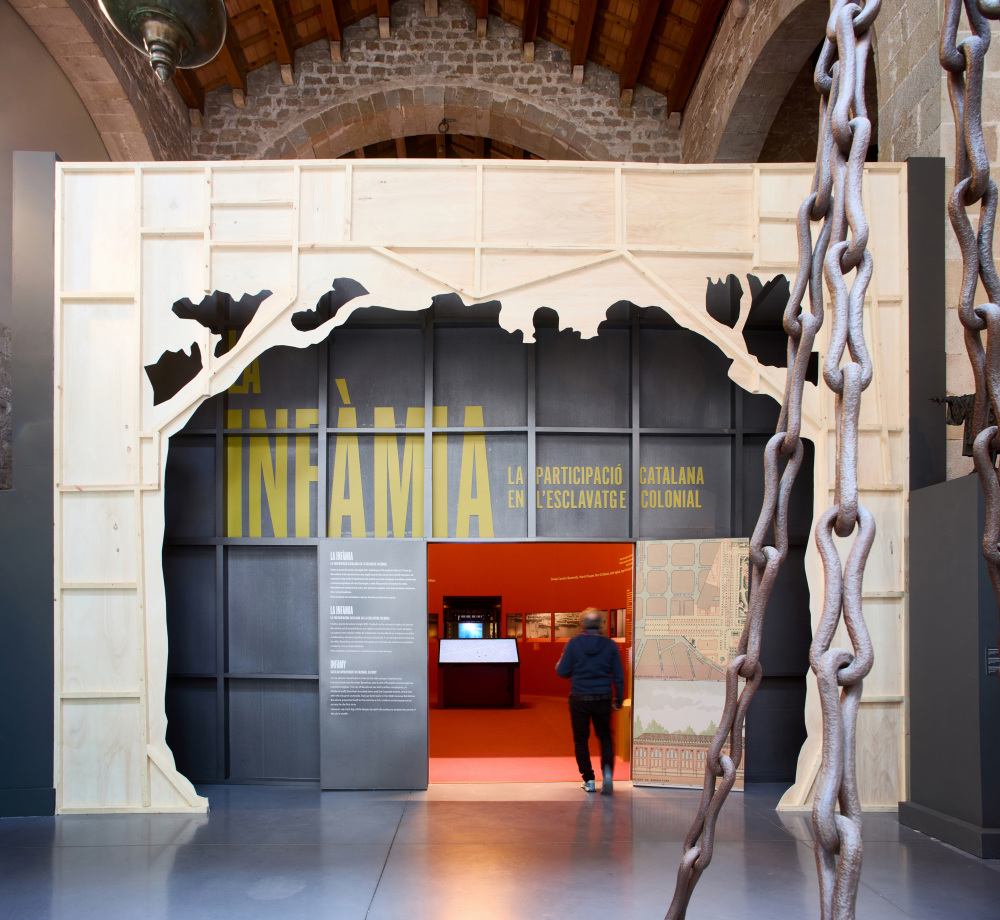
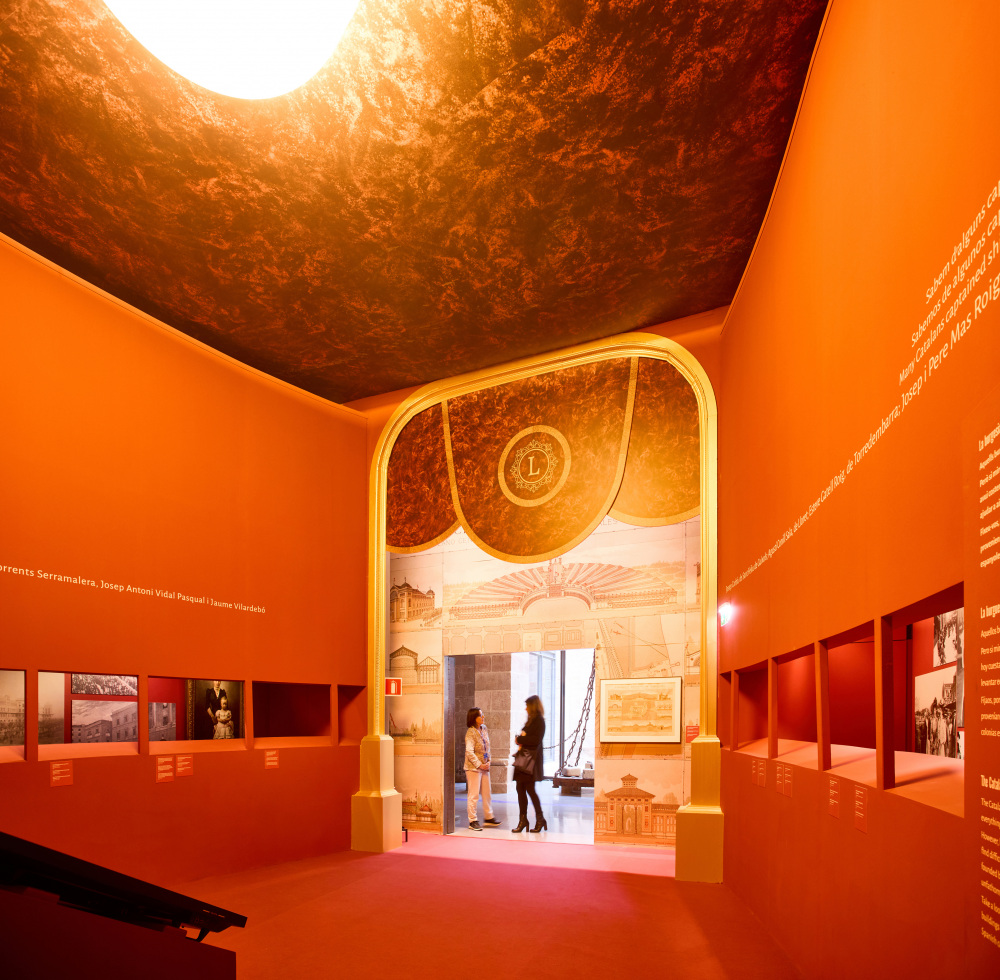
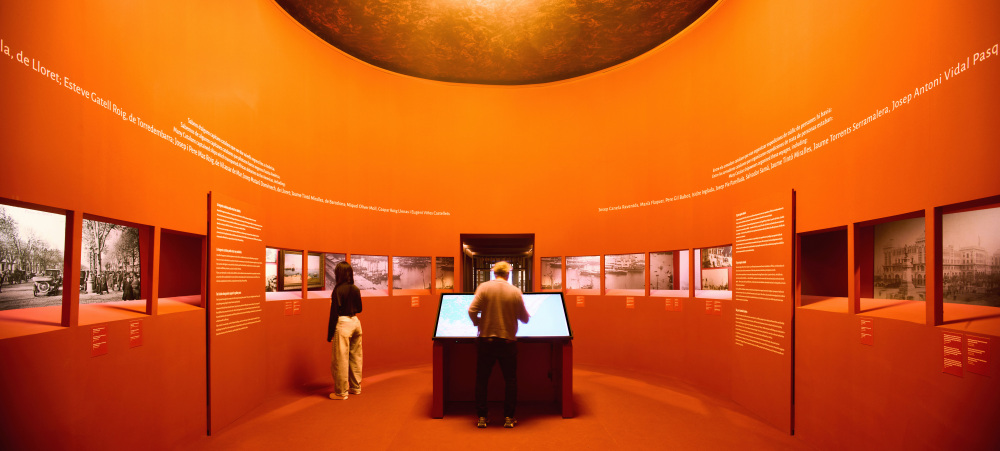
The exhibition tour begins as visitors find themselves behind a theatrical set, where a steel curtain conceals the auditorium. The performance starts as they pass through a small door leading to the heart of a theater’s seating area, evoking the hemicycle of Barcelona’s Liceu—the common space where the bourgeoisie of the time gathered. This metaphor of the “theater of the nineteenth century” helps to understand how life unfolded on different levels, where a seemingly respectable society acted according to economic interests that, in this context, violated human rights.
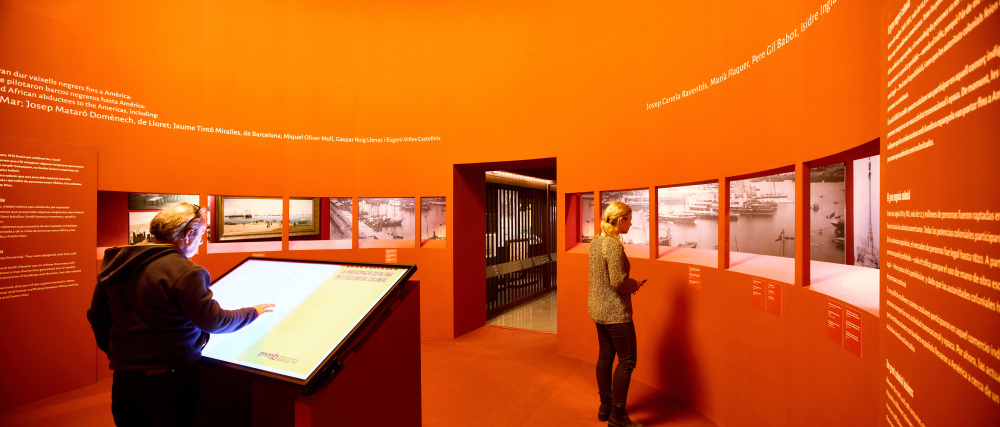
The intention behind designing this auditorium was not to create a warm and welcoming space but rather to evoke discomfort. A single sodium gas lamp floods the entire space with an intrusive light, while the walls display a memorial dedicated to some of the prominent figures responsible for the human trade. Looking toward the stage, we discover that the performance being enacted is the 1888 Universal Exposition, a symbol of the economic prosperity achieved through the lucrative business of slave trafficking.
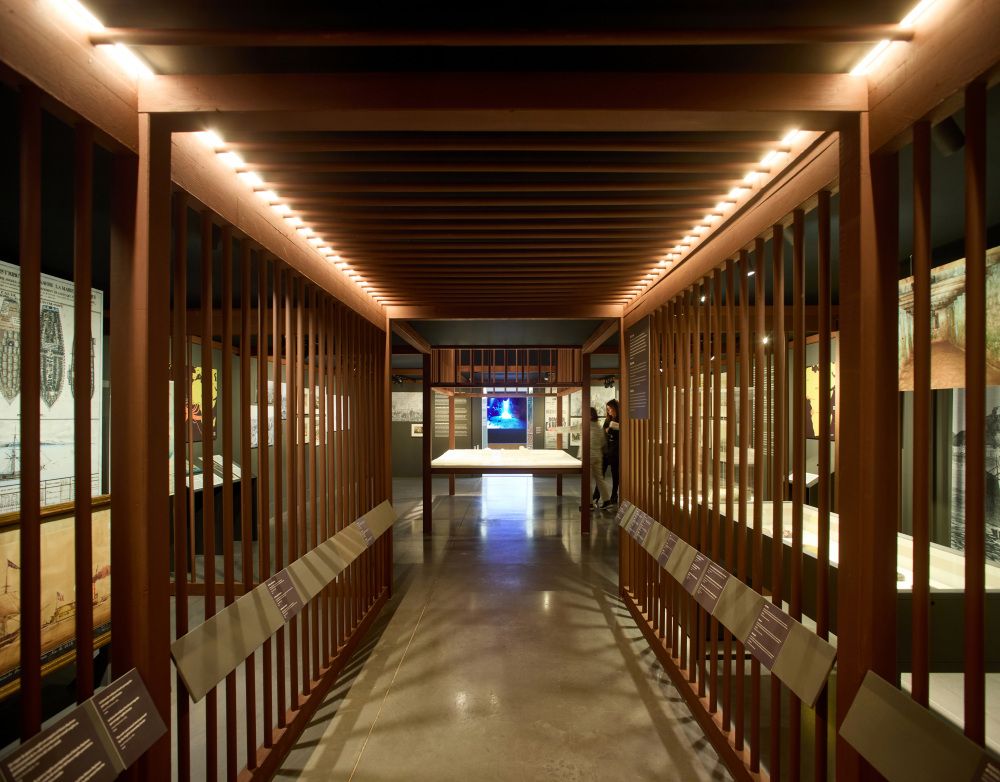
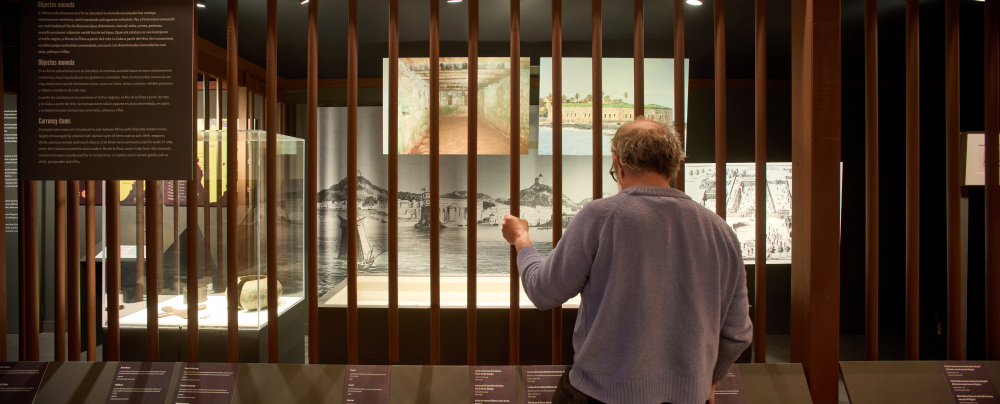
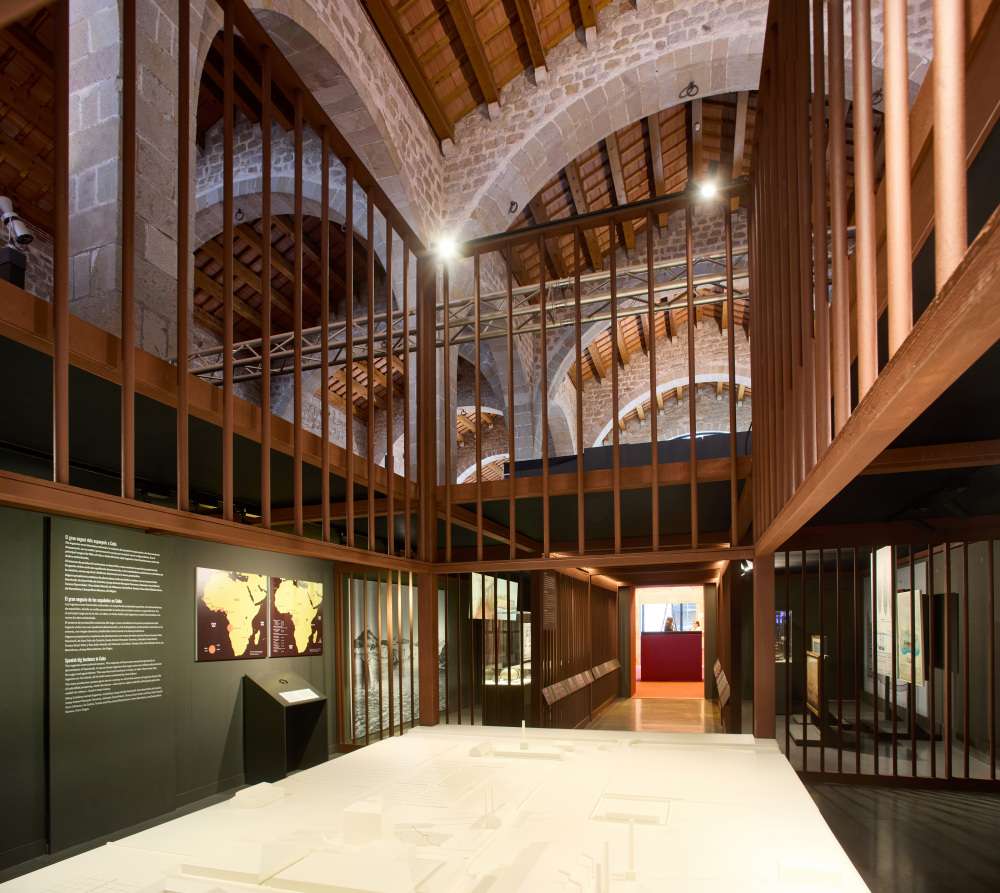
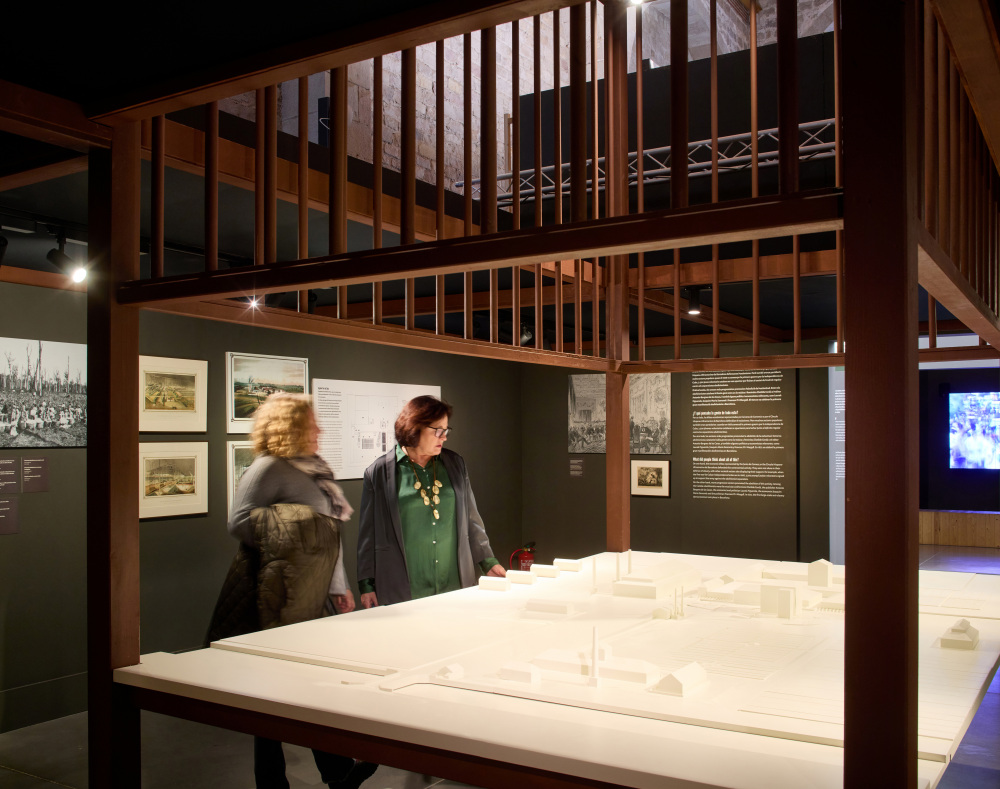
This grand theater of life and hypocrisy leads us to another space. Passing through the auditorium door, we enter the second act, where the tragic process of hunting, capturing, and deporting people from the African continent into slavery is revealed. The exhibition shows the terrible conditions of their journey to the Americas, where their lives ended, as well as the harsh labor in the Ingenios—true concentration camps and forced labor facilities where sugarcane, coffee, and cotton were processed to fill the coffers of overseas businesses.
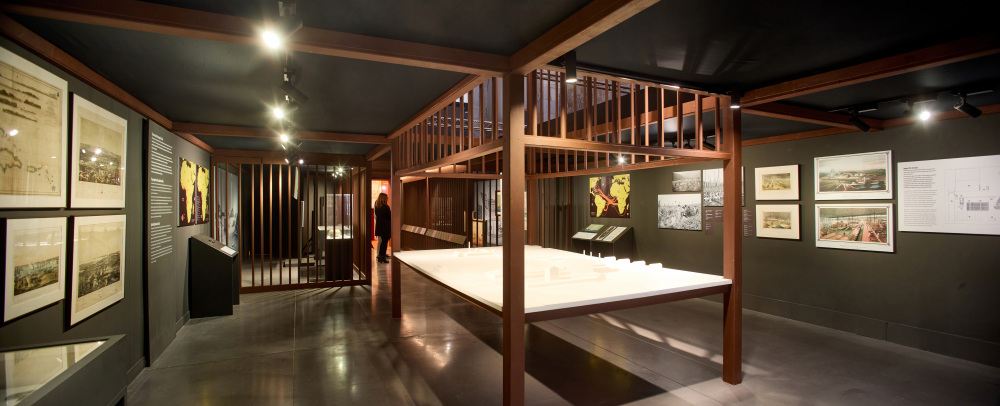
This space conveys claustrophobia. Metal bars, removed to display a model of the 'Flor de Cuba' sugar mill, reveal the final destination of the enslaved people who perished in these factories.
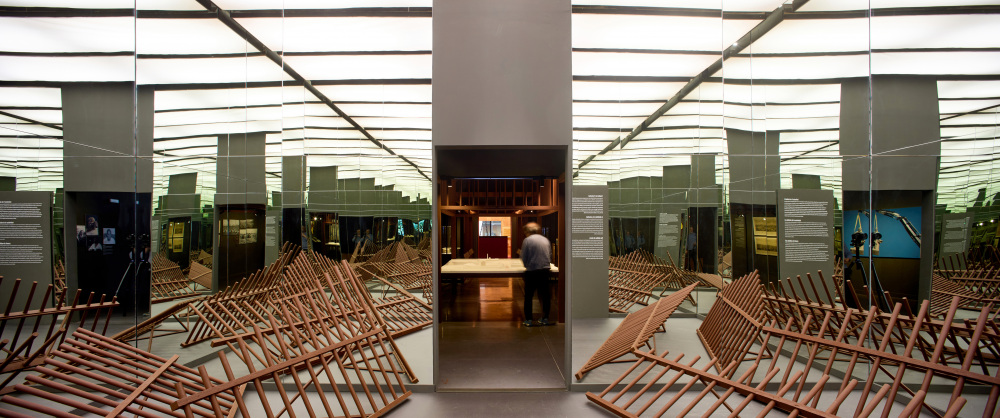
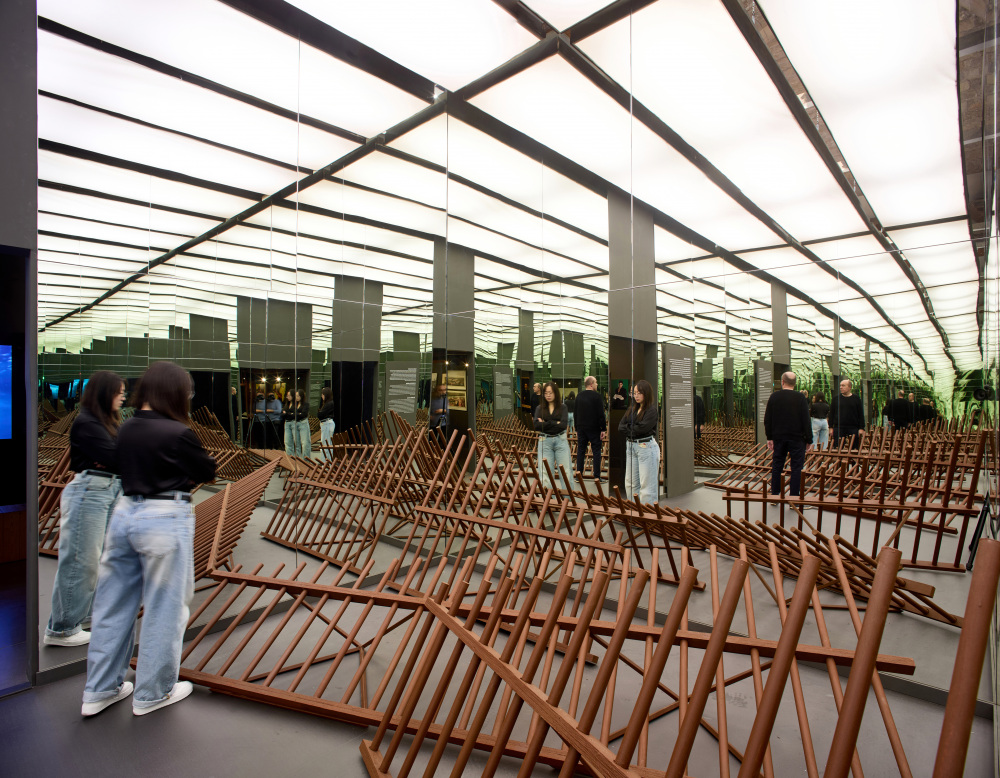
The abolition of slavery is represented in a third-act installation: a stage-like box of mirrors illuminated by a white overhead light that highlights the remnants of these bars. The mirrored reflections create the illusion of being immersed in an ocean of freedom and broken chains, suggesting a path of return.
Filmmaker Sally Fenaux presents us with a large wall at the end of the exhibition—one we had already glimpsed when passing through the steel curtain at the beginning—and, through a video piece, invites us to reflect on the racism that remains, a dark legacy of this infamy.
-
Promoting institution: Museu Marítim de Barcelona
© Photographs: Pepo Segura